



SUV Comparison: Mercedes vs. BMW
Did you know nearly one in three luxury cars sold in the U.S. come from Germany? This shows how big of a deal these brands are. When you buy a luxury car, you’re not just getting a vehicle. You’re investing in a legacy of top-notch engineering.
I’ve studied the car market for years to help you make smart choices. A SUV comparison Mercedes vs BMW is key for finding the best mix of comfort and speed. This premium SUV showdown is the top of modern car design.
I aim to give you a clear, personal view of these leading brands. By doing a top SUV brand comparison, I’ll help you pick the best fit for your life and driving habits.
Key Takeaways
- German luxury vehicles dominate a significant portion of the American automotive market.
- Choosing between these two manufacturers is a major decision for any high-end buyer.
- My analysis focuses on providing an objective, first-person perspective for consumers.
- Understanding the core differences helps in selecting the right vehicle for your lifestyle.
- This guide serves as a foundation for evaluating current high-end market offerings.
Introduction to Luxury SUVs
Looking at today’s cars, picking between two German giants is key. It’s all about finding the best luxury SUV that fits your life. You might want comfort or speed, so knowing what each brand offers is vital.
“The true measure of a luxury vehicle is not just in its features, but in how it anticipates the driver’s needs before they even arise.”
Overview of Mercedes SUV Lineup
In my Mercedes SUV review, I see a focus on opulence and advanced engineering. Their cars are like a safe haven on wheels. They block out the outside world, making your ride smooth.
Their lineup is all about:
- Plush interior materials that show off modern luxury.
- Advanced suspension for a ride that feels like floating.
- Top-notch tech inside that’s easy to use.
Overview of BMW SUV Lineup
My BMW SUV review shows a brand that loves driver engagement and sporty handling. Their cars are for those who love the drive as much as the destination. They stand out with:
- Steering that gives you great feedback on the road.
- Strong engines for quick starts.
- A design that’s both useful and sporty.
This SUV comparison Mercedes vs BMW shows both brands are top-notch. But they appeal to different drivers. It’s up to you to decide between Mercedes’ calm or BMW’s thrill.
Design and Aesthetics
The true essence of a luxury SUV comparison is the mix of looks and function. Each maker has its own style, fitting different tastes.
One brand goes for timeless elegance with smooth lines. The other chooses a bold, sporty look. Knowing these styles helps find the right car for you.
Exterior Design Elements
Mercedes-Benz is known for its classy look with smooth edges. Their design is understated luxury that lasts long.
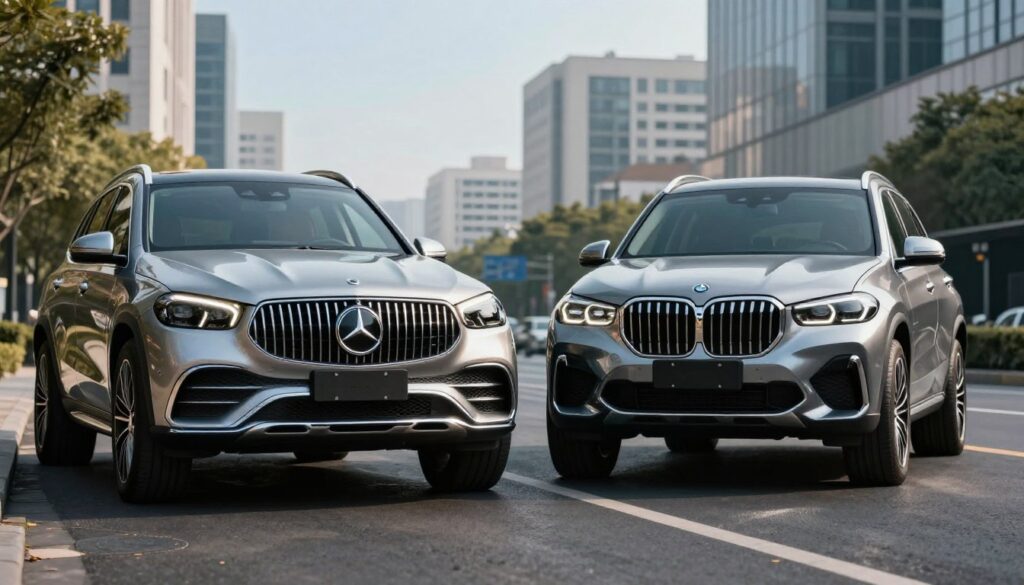
BMW, on the other hand, has a bold stance. Their kidney grilles and sharp lines show power and performance. This grabs attention on the road.
“Design is not just what it looks like and feels like. Design is how it works.”
Interior Quality and Comfort
Inside these cars, you see premium craftsmanship at work. Mercedes creates a cozy feel with wood and leather. It’s very inviting.
Their lights can change colors, making every ride feel special. It’s like flying first class.
BMW focuses on the driver. They make sure everything is easy to reach. Their use of carbon fiber and a driver-focused design shows their love for driving.
Performance and Handling
The heart of a premium vehicle is its mechanical ability and how it handles on the road. When comparing the top SUV brands, it’s clear they focus on different aspects of driving. This is to meet the needs of their customers.
Engine Options and Powertrains
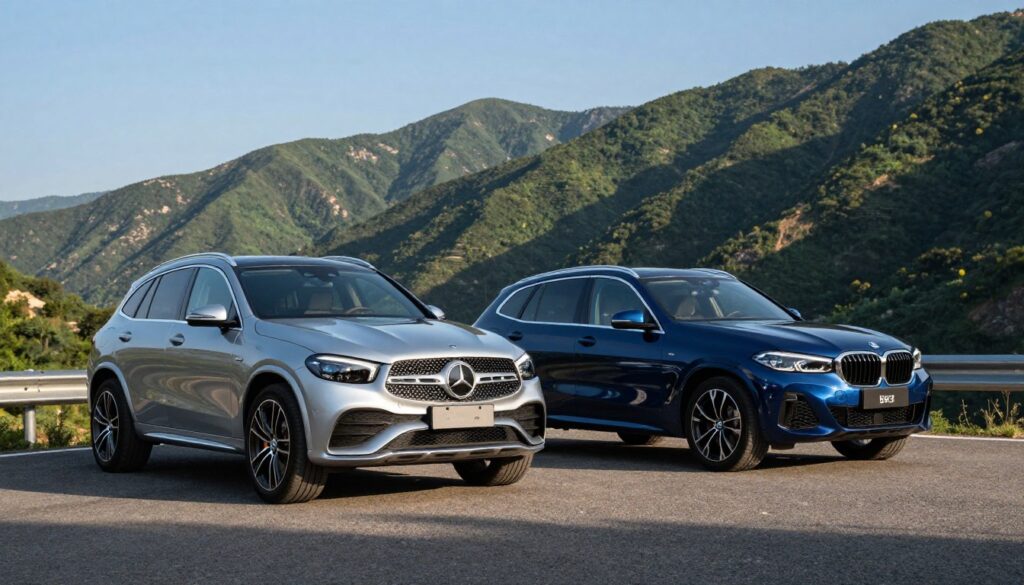
The premium SUV showdown often highlights the powertrain options. Mercedes-Benz focuses on smooth power delivery. They use advanced turbocharging for easy acceleration.
BMW, on the other hand, is known for its inline-six engine architecture. This gives a unique, linear power band. Both brands offer advanced engineering that sets the standard for luxury.
Driving Dynamics and Suspension
When comparing luxury SUVs, how they handle on the road is key. Mercedes-Benz aims for a plush, comfort-oriented suspension. They use air suspension to smooth out road bumps.
BMW, by contrast, focuses on precision-focused handling. Their chassis is tuned for sharp turns and a more connected feel. This makes the vehicle feel smaller and more agile.
| Feature | Mercedes-Benz Focus | BMW Focus |
|---|---|---|
| Primary Goal | Ride Comfort | Driving Dynamics |
| Engine Character | Refined Power | Linear Performance |
| Suspension Feel | Supple & Smooth | Firm & Precise |
| Ideal Driver | Luxury Seeker | Driving Enthuasiast |
Technology and Infotainment
The luxury car market now focuses on digital smarts over raw power. A premium SUV showdown is all about how well a car connects with your digital world. The inside of the car is now the main way you interact with it.
Infotainment Systems Compared
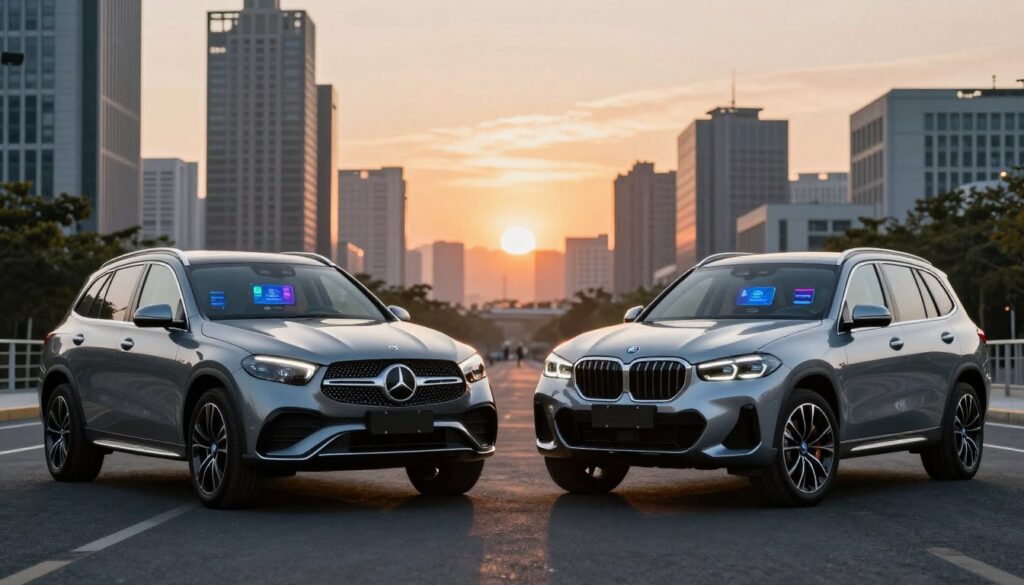
Mercedes-Benz uses the MBUX system, known for its stunning visual clarity and smart navigation. Its voice recognition is top-notch, making it feel like a personal assistant. You can also customize the interface to show what you want to see.
BMW’s iDrive system is a leader in intuitive control. I like the rotary dial for menus, as it’s less distracting than screens. Both systems support wireless Apple CarPlay and Android Auto.
Safety Features and Ratings
When looking at Mercedes vs BMW SUV features, safety is key for families. Both offer advanced driver-assistance systems like automatic emergency braking and lane-keeping assist. These features help keep you safe on long drives.
Both brands get high safety ratings from top organizations. Their cars are built to protect you in all driving situations. Here’s a comparison of their safety features.
| Feature Category | Mercedes-Benz MBUX | BMW iDrive |
|---|---|---|
| Primary Interface | Touchscreen & Voice | Rotary Dial & Touch |
| Voice Assistant | Natural Language AI | BMW Intelligent Personal |
| Safety Suite | Driving Assistance Package | Active Driving Assistant |
| Smartphone Sync | Wireless Standard | Wireless Standard |
Fuel Efficiency
Looking at fuel efficiency means checking how Mercedes and BMW make their engines. Today, you don’t have to pick between power and saving fuel. By looking at Mercedes vs BMW SUV features, we see they both aim for less fuel use through design and engine tech.
Miles Per Gallon (MPG)
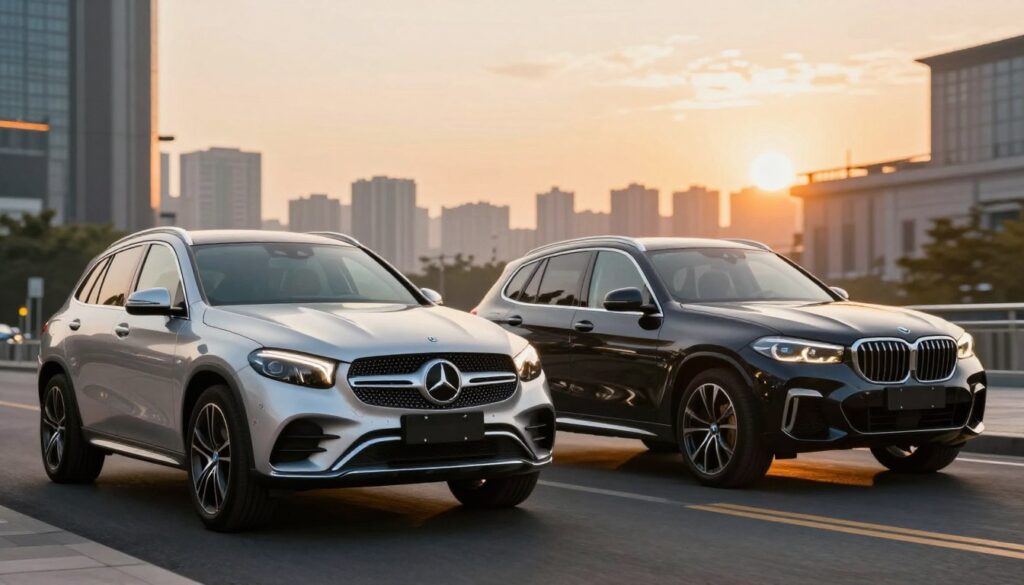
Fuel economy changes a lot based on engine size and car weight. Official EPA ratings are a starting point. But, driving on the highway often gets better gas mileage than city driving. Both brands use smart transmissions to keep RPMs low at steady speeds.
“Efficiency is not just about the engine; it is about the harmony between the driver, the machine, and the road ahead.”
In a luxury SUV performance comparison, smaller turbocharged engines are better for daily driving. They have enough power and good gas mileage. Here’s how these cars usually do in everyday driving.
| Category | Mercedes-Benz Approach | BMW Approach |
|---|---|---|
| City Efficiency | Optimized for stop-start | Focus on throttle response |
| Highway MPG | High-gear cruising focus | Aerodynamic efficiency |
| Engine Tech | Mild-hybrid integration | Twin-scroll turbocharging |
Hybrid and Electric Options
The move to electric cars has changed the game for Mercedes vs BMW SUV features. Mercedes-Benz has the EQ line for seamless luxury and long range. BMW is working on its i-series for a sporty feel in electric cars.
Plug-in hybrids are a good choice for those not fully committed to electric cars. They let you drive short distances without emissions and have a gas engine for longer trips. This luxury SUV performance comparison shows that hybrids and EVs aim to cut carbon emissions without losing luxury.
Pricing and Trim Levels
Understanding the cost is key in my high-end SUV comparison. Both brands have complex pricing that rewards smart choices. This helps me see if the high price is worth it.
Entry-Level Market Positioning
At the base level, the Mercedes vs BMW SUV features are quite similar in price. Mercedes focuses on comfort, while BMW emphasizes tech. These trims set the tone for the whole driving experience.
- Standard Safety Suites: Both offer advanced safety features from the start.
- Connectivity: All entry models come with infotainment screens and phone integration.
- Trim Logic: Moving up adds premium seats and better sound systems.
Flagship Model Investment
The top models show a clear luxury SUV performance comparison. They offer the most power, unique materials, and latest tech. The higher price is worth it for these special features.
Investing in a flagship model unlocks unique customization options. These cars are the best of what each brand offers. Here’s how they compare in terms of value and market position.
| Category | Entry-Level Focus | Flagship Focus |
|---|---|---|
| Primary Goal | Value and Accessibility | Performance and Prestige |
| Engine Tech | Efficiency-focused | Power-focused |
| Interior | Synthetic/Standard Leather | Nappa/Exclusive Leather |
| Technology | Essential Connectivity | Advanced Autonomous Features |
It’s all about what you value more: comfort or performance. Look at the options carefully, as they can change the price a lot. Picking the right trim means your money goes to what you need.
Reliability and Maintenance
I think true value in a premium vehicle goes beyond the first cost. When I do a top SUV brand comparison, I look at the long-term care needed. This keeps these vehicles in top shape.
It’s key to understand the total cost of owning a vehicle. This helps you get ready for the upkeep of high-performance engineering over years.
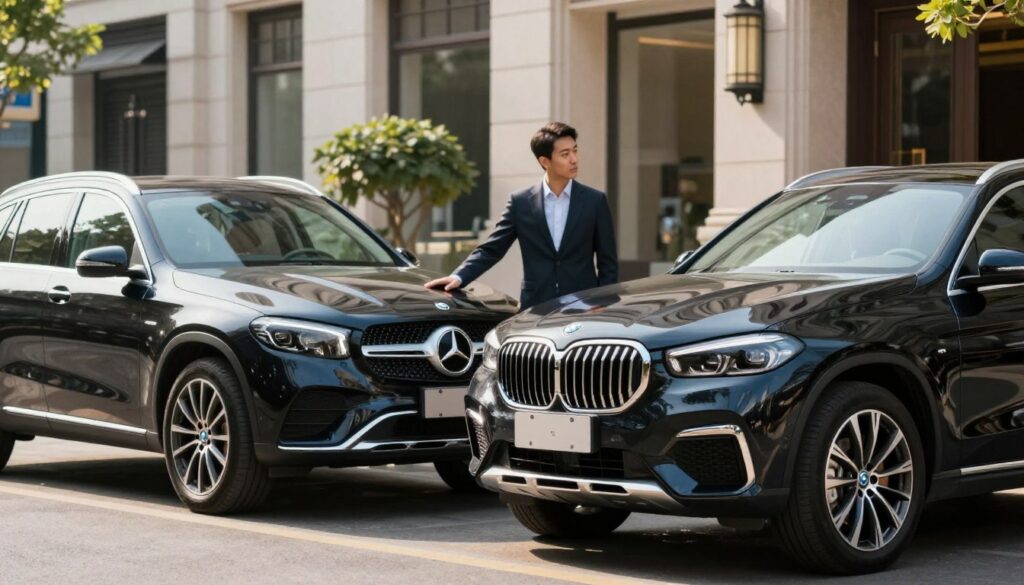
Warranty Coverage Analysis
Both brands offer good standard warranties in the U.S. You get a 4-year or 50,000-mile limited warranty. This covers most factory defects.
This warranty gives peace of mind for the first five years. But, it’s wise to consider extended service contracts for longer ownership.
“Luxury vehicle ownership is an investment in engineering excellence, but it requires a proactive approach to routine service to maintain peak performance and reliability.”
Common Issues and Solutions
Even top vehicles face mechanical or electronic problems as they get older. In my high-end SUV comparison, I’ve seen both brands deal with sensor malfunctions and software issues.
Most problems are fixed with software updates or small part swaps at authorized centers. Regular maintenance stops small issues from becoming big, costly repairs.
| Feature | Mercedes-Benz | BMW |
|---|---|---|
| Standard Warranty | 4 Years / 50k Miles | 4 Years / 50k Miles |
| Maintenance Plan | Prepaid Options | BMW Ultimate Care |
| Common Focus | Electronic Systems | Cooling Components |
| Service Interval | 10,000 Miles | 10,000 Miles |
Your experience depends on following the manufacturer’s service schedule. By focusing on preventative care, your SUV stays reliable for years.
Customer Reviews and Satisfaction
The real story of a car is told by those who drive it every day. Looking at long-term ownership data helps find the best luxury SUV for you. It cuts through the marketing to show what drivers really value.
Owner Experiences with Mercedes
Most Mercedes SUV reviews talk about the interior. Owners love the luxury feel that makes them feel like they’re in a more expensive car. They often mention the plush seating and the ambient lighting as highlights of their daily drive.
But, some owners find the infotainment system hard to use while driving. They say the tech looks great but is tricky to navigate. Despite this, they love the unmatched comfort the brand offers.
Owner Experiences with BMW
On the other hand, BMW SUV reviews often talk about the excitement of driving. Owners say the handling and engine feel are top-notch. They love how these cars connect them to the road in a way other luxury cars don’t.
Reliability is a big topic in forums. While most are happy with their cars, some say maintenance can be pricey. But, they feel the drive is worth it for those who love performance.
| Feature | Mercedes-Benz | BMW |
|---|---|---|
| Primary Strength | Interior Luxury | Driving Dynamics |
| Tech Interface | Highly Visual | Intuitive Control |
| Owner Sentiment | High Comfort | High Performance |
| Maintenance | Premium Service | Performance Focused |
Conclusion and Recommendations
Choosing between Mercedes-Benz and BMW is all about your driving habits. My SUV comparison shows how each brand meets different needs. They have their own ways of engineering.
This guide helps you pick the right luxury SUV. It’s about whether you want a car that’s fast or one that’s comfy for daily drives.
Performance Enthuisasts
BMW is the best for those who love fast cars. It offers sharp steering and quick acceleration. The M-series is perfect for those who enjoy driving fast.
Family Comfort
Mercedes-Benz is great for families. It provides a quiet, luxurious cabin. It’s perfect for those who want a smooth ride and fancy interiors.
Go for a test drive at your local dealership. Seeing these cars in person will help you decide. You’ll know which one fits your lifestyle best.
FAQ
Which brand should I choose for a more engaging driving experience in this SUV comparison Mercedes vs. BMW?
In my review, BMW is the clear winner for drivers. They focus on precise steering and quick handling. The BMW X5 is a top choice for those who love to drive.
Mercedes-Benz, on the other hand, is all about comfort. Their cars are great for long drives but not as exciting to drive.
How do the interior materials and build quality differ in this high-end SUV comparison?
Mercedes-Benz is known for its luxury feel. They use soft leathers and fancy wood to make their cars feel like a lounge. BMW, on the other hand, goes for a more modern look.
BMW’s cars are built to last and are easy to use. Mercedes-Benz wins in luxury, but BMW is better for durability.
Which manufacturer offers the best luxury SUV for technological innovation?
Both Mercedes-Benz and BMW have amazing tech. Mercedes-Benz has a stunning Hyperscreen display. BMW’s iDrive system is easy to use while driving.
It’s a tough choice, but Mercedes-Benz is visually stunning. BMW is better for those who want to use their tech on the go.
In a luxury SUV comparison, which brand is better for long-distance family travel?
Mercedes-Benz is the best for family trips. Their air suspension makes for a smooth ride. BMW’s cars are sportier but not as comfortable.
If you want to arrive feeling fresh, Mercedes-Benz is the way to go.
What should I expect regarding maintenance and reliability in this premium SUV showdown?
When comparing costs, BMW is a better deal upfront. They offer free maintenance for three years or 36,000 miles. Mercedes-Benz is reliable in the long run, but BMW is cheaper for the first few years.
Are there competitive electric options available in this top SUV brand comparison?
Yes, there are great electric options. Mercedes-Benz has the EQE and EQS, known for their quietness. BMW’s iX is praised for its driving feel despite its heavy battery.
Both brands are leading the way in electric luxury SUVs.

Hi! I’m Moheen Iftikhar, the creator of «CarPulseMedia» I’m passionate about exploring the latest car trends, automotive technology, and driving tips to help you stay informed and inspired. I share expert guides, car reviews, and practical advice for every auto enthusiast.