



Tesla Self-Driving News: What’s New in Autonomous Tech
Did you know that self-driving cars have already driven over one billion miles in the U.S.? This shows how fast our daily drives are becoming more automated.
Keeping up with Tesla self-driving news is key for today’s drivers. As tech changes car safety, it’s important to understand these systems. I’m eager to see how these changes affect our roads and travel.
By staying current with Tesla self-driving news, we can better handle the fast pace of car tech. This helps us understand the mix of new ideas and road safety. Let’s explore this exciting time in travel.
Key Takeaways
- Autonomous vehicles have surpassed one billion miles of real-world testing.
- Software updates are fundamentally changing how we interact with our cars.
- Staying updated on industry shifts is vital for modern driver safety.
- The integration of AI into daily commutes is accelerating across the United States.
- Understanding these systems helps bridge the gap between engineering and daily use.
Latest Developments in Tesla’s Autopilot System
Recent Tesla self-driving news shows a big step forward in how cars handle roads. The software is getting better, making the car and its surroundings work together smoothly.
Overview of Recent Enhancements
The Tesla Autopilot system has seen big improvements with new updates. These updates make the car stay in its lane better and handle traffic more smoothly.
Thanks to electric car technology, the system can process images faster. This means the car can react quicker to changes in traffic, making driving feel more natural.
New Features and Their Benefits
The latest updates make the car’s vision system more reliable. This helps the car keep a safe distance and handle tight turns or busy lanes.
These features help drivers stay alert during long drives. By taking over tasks like steering and speed, drivers can focus more on what’s happening around them.
| Feature | Primary Benefit | Improvement Level |
|---|---|---|
| Lane-Keeping | Enhanced Stability | High |
| Traffic-Aware Cruise | Smoother Braking | Medium |
| Vision Processing | Faster Reaction | High |
User Reactions and Feedback
Feedback from owners is mixed. Some say the car is more confident in heavy traffic, which makes them trust the tech more.
“The latest software update has made my daily commute significantly more relaxing, as the car handles stop-and-go traffic with impressive grace.”
But others are cautious, saying they always need to be in control. I think this mix of views is important. It shows how far the tech has come and the need for drivers to stay alert.
Regulatory Updates Impacting Tesla’s Technology
The journey to full autonomy is filled with legal challenges more than technical ones. Tesla is pushing the limits of software, but it faces a maze of rules. Understanding autonomous vehicle updates across different places is key.
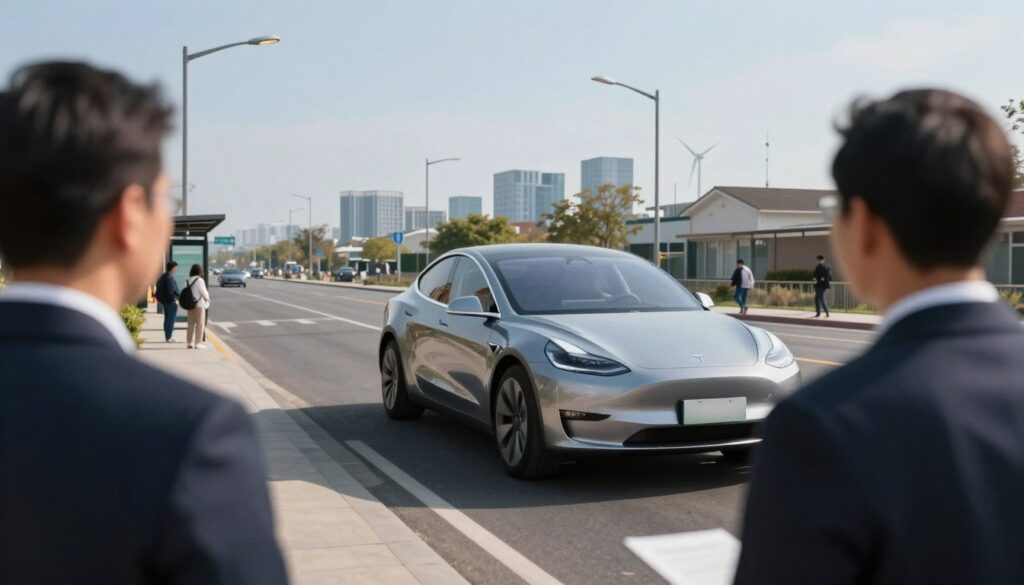
Overview of Regulatory Changes
There’s no single federal law for self-driving cars in the U.S. Instead, a patchwork of guidelines exists. This makes it hard for companies to update autonomous vehicle updates across the country.
State-Wise Compliance Challenges
States have their own rules for testing self-driving cars. Some are open to new ideas, while others have strict rules. This means Tesla must adjust its plans for each area.
| State | Regulatory Stance | Compliance Difficulty |
|---|---|---|
| California | Strict Reporting | High |
| Arizona | Innovation-Friendly | Low |
| Texas | Permissive | Low |
| Florida | Pro-Deployment | Moderate |
Future Prospects for Legislation
The industry is moving toward a unified approach for autonomous vehicle updates at the federal level. Lawmakers are working to create standard rules for safer and more efficient use. If they succeed, we’ll see advanced driving features adopted faster nationwide.
Tesla’s Full Self-Driving Mode: What’s Next?
Looking into the future of autonomous driving developments means understanding Tesla’s current beta software. Many people mix up driver-assist features with true autonomy. It’s important to know the difference between what we have now and the goal of a fully self-driving car. Keeping up with the latest Tesla self-driving news helps clear up these technical differences.
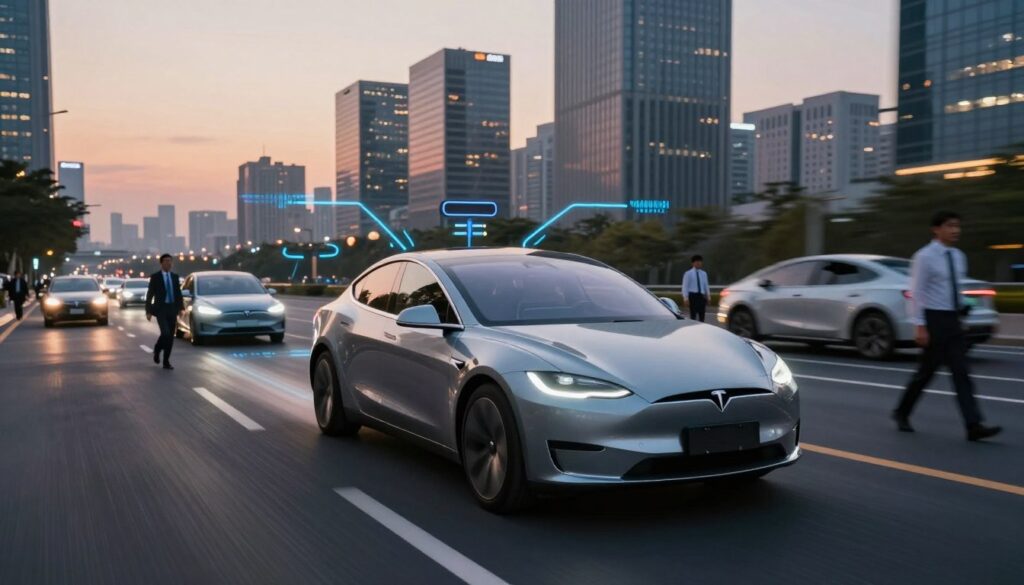
Key Features Currently in Beta
The beta version of Full Self-Driving (FSD) has advanced tools for complex environments. One standout feature is city street navigation. It lets the car handle intersections, stop signs, and traffic lights with little human help.
Also, the system has automated parking. It finds and parks in tight spots without human help. These features use a huge neural network to process data in real-time, making quick decisions on the road.
Timeline for Broader Rollout
Getting to full autonomy is a journey of technical milestones, not a set date. The rollout’s timing depends on proving safety and reliability in different weather and road conditions. Engineers are working to lower the “disengagement rate,” which shows how often a human must take control.
The table below shows how these features are progressing toward wider use:
| Feature Category | Current Status | Primary Goal |
|---|---|---|
| City Navigation | Beta Testing | Urban Efficiency |
| Automated Parking | Available | Precision Maneuvering |
| Full Autonomy | In Development | Zero Intervention |
User Testimonials and Experience
Many drivers say using FSD feels like a peek into the future of driving. One user said, “The car’s handling of complex roundabouts is truly remarkable, but I always keep my hands ready to take over.” This shows the balance between trusting the software and needing human oversight.
From my own experience, the tech is getting better fast, but humans are key for now. As autonomous driving developments keep improving, the gap between beta testing and full autonomy will shrink a lot.
Technical Challenges Tesla Faces with Autonomy
The journey to true self-driving cars is filled with tough engineering hurdles. The industry has made big steps, but moving from assist features to full autonomy is a big challenge. It requires solving complex problems in real-time.
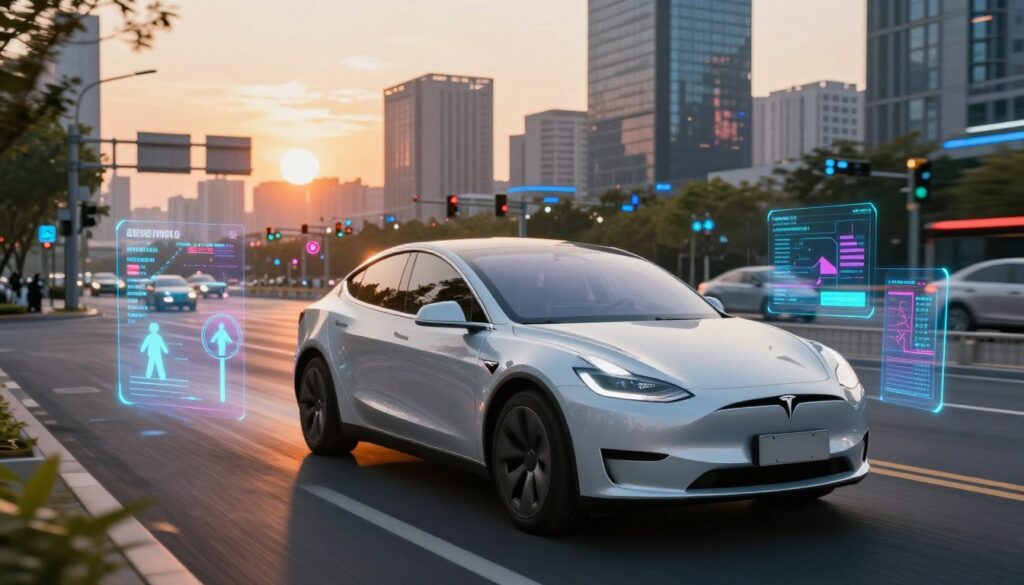
Sensor Technology Improvements
The car’s ability to see the world depends on its sensors. Tesla is moving towards a vision-based system. This needs high-level processing to match human vision.
To enhance these systems, Tesla works on:
- Sensor fusion to mix visual data with spatial awareness.
- Improving neural networks to spot objects better in dim light.
- Lowering image processing delay for quick reactions.
Data Management and Privacy Concerns
To improve Tesla AI technology, the company needs to process lots of driving data. This is a fine line between training AI and keeping user data private.
Users worry about their location and driving habits being stored. Tesla uses strict data anonymization to address this. This way, the system learns from patterns without revealing personal info.
Addressing Safety Protocols
Safety is the top focus at every step. The company runs thorough tests to reduce risks before releasing new software.
These safety steps include:
- Extensive simulation testing in virtual worlds.
- Shadow mode analysis where software runs in the background to compare with human drivers.
- Regular updates to Tesla AI technology based on real-world scenarios.
By working on these critical technical pillars, Tesla aims to advance self-driving car technology. I believe these efforts will lead to safer and more reliable autonomous driving for all.
Competitors in the Autonomous Vehicle Space
Tesla leads the pack, but the field of autonomous driving developments is getting crowded. Many big names in the car world and tech are spending billions on their own systems. This means everyone is racing to make the next big leap.
Keeping up with autonomous vehicle updates is key to understanding the market. It’s not just about the tech; it’s about how a car sees the world.
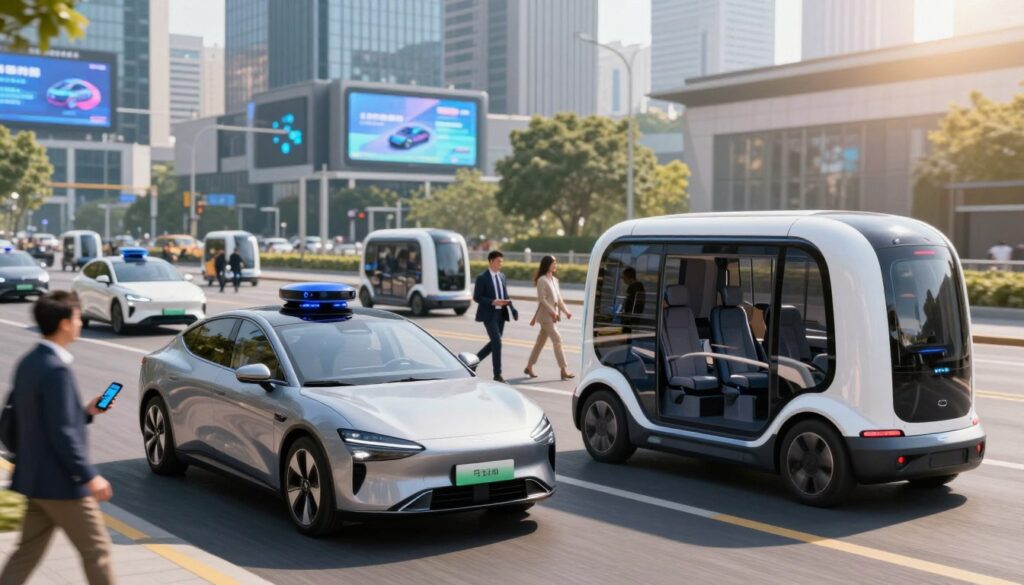
How Tesla Compares to Rivals
Tesla stands out by using cameras to see the world. Most, like Waymo and Cruise, mix LiDAR, radar, and cameras. Tesla’s vision-only approach tries to mimic human sight, aiming for full autonomy.
Others say LiDAR is safer. Tesla gathers a lot of driving data, while others focus on detailed maps. This shows the different paths to latest self-driving innovations.
Noteworthy Innovations from Other Brands
Other brands are making big moves in specific areas. Mercedes-Benz has Level 3 systems for certain traffic, letting drivers relax. These autonomous driving developments show the industry is moving towards reliable solutions for specific needs.
Waymo leads in robotaxis, showing driverless tech works in busy cities. Their success in dense traffic shows latest self-driving innovations are already making a difference.
Industry Collaborations and Partnerships
The cost of research is high, so companies are teaming up. I see more partnerships between car makers and software companies. These alliances help speed up autonomous vehicle updates worldwide.
Together, they can handle the big data needed for AI. This means the future of cars will likely be a mix of shared tech, not just one leader.
Tesla’s Vision for the Future of Transportation
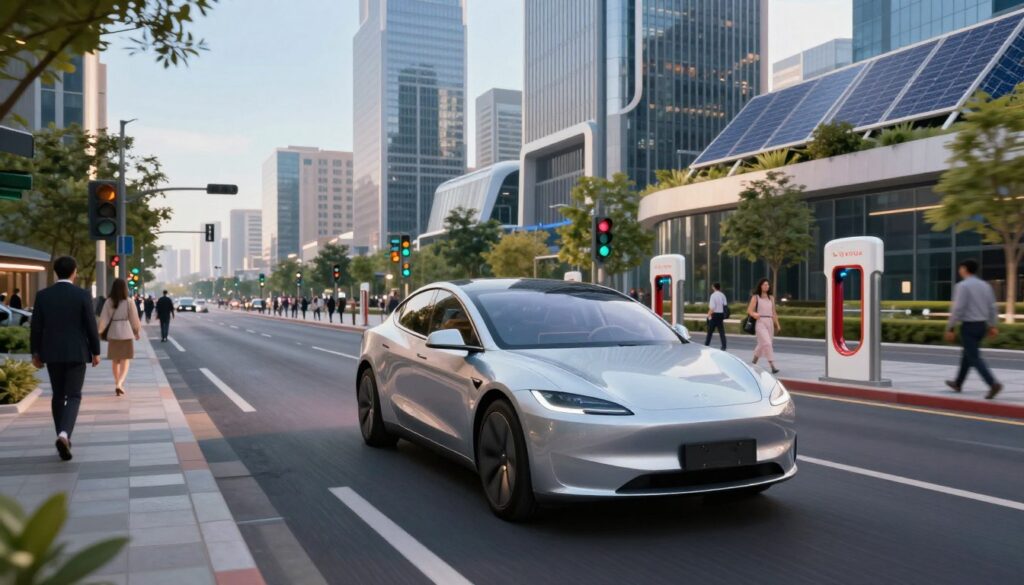
I see a future where getting around is easy and smart. Today, we’re moving toward a world where travel is hassle-free. Tesla AI technology is key to changing how we move people and goods.
Autonomy and Sustainability Goals
The heart of this vision is combining smart cars with caring for our planet. Artificial intelligence in vehicles will cut down on energy waste on roads. This means fewer emissions for every mile we travel.
Also, moving to self-driving cars helps the environment. With less traffic, cars use less energy. This makes cities cleaner and greener.
Integration with Smart City Initiatives
I imagine a future where cars talk to the city. Self-driving car advancements will connect Tesla cars with city systems. This lets cars and cities share information in real-time.
- Optimized traffic light timing based on vehicle flow.
- Dynamic routing to prevent bottleneck formation.
- Enhanced safety through vehicle-to-infrastructure (V2I) alerts.
This connection makes traffic flow better. It turns our roads into a well-organized network.
Predictions from Experts
Experts say Tesla AI technology will change how we plan cities. As these systems get better, cities might change to fit self-driving cars. We could see less parking and more public spaces.
“The true revolution in transportation will not be the car itself, but the intelligent network that allows it to move with perfect efficiency through our complex urban grids.”
Most agree that artificial intelligence in vehicles will change our lives. We’re working towards safer, faster, and greener travel.
Consumer Reactions to Tesla’s Self-Driving Features
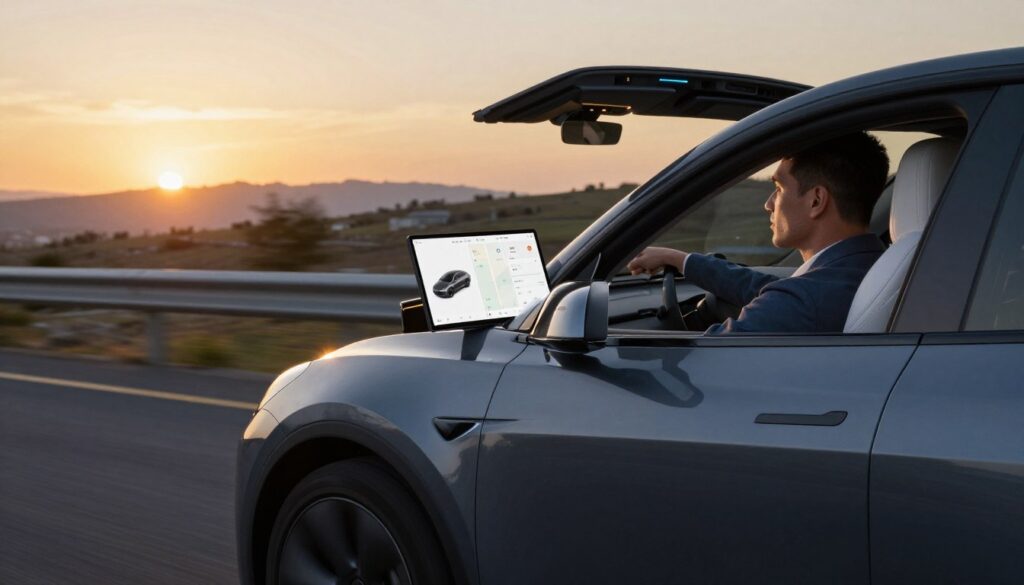
Drivers’ views on the Tesla Autopilot system vary widely. Some love its advanced tech, while others doubt its abilities. This shows the challenge of balancing new tech with everyday driving needs.
Surveys and User Feedback
Many users like the ease of driver-assist features. But, they want to know more about what it can’t do. They’re eager for full autonomy but get frustrated when it needs human help often. The gap between what’s promised and what’s real is a big issue.
Perceptions of Safety and Reliability
Trust in the Tesla Autopilot system depends on how it handles unexpected situations. Being open about how it works is key to gaining trust. Tesla is working on better systems to keep drivers alert while the car drives itself.
“The future of transportation relies on a partnership between human intuition and machine precision, where safety is the non-negotiable foundation of every mile driven.”
Impact on Tesla’s Brand Image
The Tesla Autopilot system greatly affects how people see the brand. When it works well, Tesla looks like a leader in car tech. But, any safety issues can cause a lot of criticism. It’s important for Tesla to talk openly with users about updates and safety.
The Role of AI in Tesla’s Self-Driving Technology
I think the real power of modern cars lies in their advanced software. Tesla uses artificial intelligence in vehicles to change how cars see the world. This digital brain constantly watches and understands the surroundings in a smart way.
Machine Learning Developments
The heart of this system is machine learning. It handles huge amounts of visual data quickly to make split-second driving decisions. This lets the car spot objects, lanes, and signals with great accuracy.
These autonomous driving developments use deep learning to think like humans. By learning from many scenarios, the system gets better at handling unexpected situations. It’s amazing how the car can guess dangers before they happen.
AI’s Contribution to Safety Improvements
Safety is always the top goal for Tesla’s updates. Tesla AI technology gets smarter with data from millions of miles driven by owners worldwide. This shared knowledge helps every car get better.
When the system faces a rare situation, it saves the data for study. Engineers then use this to make the algorithms better. This iterative process lowers the chance of human mistakes on the road.
Future of AI in Autonomous Driving
I see AI’s role in cars getting even bigger. We’re heading towards a time when software might be better than humans in all driving situations. This is a big step forward in autonomous driving developments.
As Tesla AI technology gets better, we’ll need humans less. I think these changes will change how we see personal travel. The aim is for a safer, smoother, and more efficient way to get around.
Community Impact of Tesla’s Self-Driving Cars
I think self-driving cars will change our cities a lot. As they become more common, our streets will change from being made for people to being made for cars.
Changes to Urban Infrastructure
Our towns need to change for self-driving cars. Parking garages might not be needed as much anymore. Cars can drop off people and then go park elsewhere.
- Redesigned curbside management to make picking up passengers easy.
- Smart traffic signals that talk to cars.
- Parking lots could become parks or homes.
Effects on Public Transportation
Will self-driving cars replace buses and trains? Or will they just help them? I think they will be like a “last-mile” service, making it easy to get to big transit hubs.
This could make more people use public transit. But cities need to watch out for too much traffic.
Local Economic Impacts
Automation will change jobs in our area. Some jobs might disappear, but new ones will appear. We’ll need people for car care and cleaning.
Key economic shifts include:
- More jobs in car maintenance and software checks.
- New businesses for cleaning and managing shared cars.
- People will have more free time because they won’t be driving.
Self-driving cars are a big deal for our society. If we plan well, our communities will stay lively, efficient, and open to all.
Tesla and Environmental Sustainability
I think the mix of autonomy and sustainability is where the real change happens. By combining electric car technology with advanced software, we’re seeing a big shift. This shift changes how we travel and affects our planet.
How Self-Driving Tech Promotes Eco-Friendly Practices
Autonomous systems aim to cut down on energy waste. They do this by making driving smoother, with less sudden stops and starts. This leads to better fuel efficiency.
These vehicles also talk to each other, which helps traffic flow better. This means less time stuck in traffic and less energy wasted.
The Role of Renewable Energy
When you add clean energy to this tech, it gets even better. Tesla’s system, which includes solar panels and batteries, works together well. It makes your car’s energy use very low.
This setup means your car’s energy comes from the sun. It keeps your daily drive as green as possible.
| Efficiency Metric | Human Driver | Autonomous System |
|---|---|---|
| Acceleration Consistency | Variable | Optimized |
| Energy Consumption | Higher | Lower |
| Traffic Flow Impact | Causes Bottlenecks | Reduces Congestion |
Tesla’s Commitment to Clean Transportation
Tesla is all in on making the world use clean energy faster. They don’t just sell cars; they build a whole system for electric car technology worldwide.
By focusing on being efficient and using renewable energy, Tesla is changing the car industry. I believe these steps will help protect our planet for years to come.
Upcoming Events and Announcements
The world of transportation is always changing with new discoveries. Keep an eye on upcoming events to learn about the latest in self-driving cars. These gatherings are key to understanding the future of the industry.
Conferences and Tesla Presentations
Tesla often holds product launches and investor days. These events show off new electric car tech. Watch official Tesla channels for news on these important events.
What to Expect from Elon Musk and the Team
Elon Musk and his team are always pushing the limits of what cars can do. Expect to hear more about the Tesla Autopilot system at quarterly earnings calls and AI events. They’re working hard to make the system better for real-world use.
Key Dates for Consumers to Watch
Save the dates for major tech expos and Tesla events this year. These times often mark big software updates that change how we use our cars. By keeping up with these updates, you’ll be at the edge of the autonomous driving wave.
FAQ
What is the current status of the latest Tesla self-driving news regarding the Full Self-Driving (FSD) rollout?
Tesla is working hard to improve its FSD Beta features. This includes better city navigation and automated parking. Elon Musk talks about quick timelines, but a wide rollout depends on meeting tough technical goals and adapting to new rules in the U.S.
How do the latest autonomous vehicle updates improve the Tesla Autopilot system?
Recent updates have made lane-keeping and traffic control much better. Tesla’s AI technology helps the car understand its surroundings better. This makes driving safer and more intuitive on American roads.
What role does artificial intelligence in vehicles play in Tesla’s safety protocols?
Tesla uses AI to understand roads in real-time. It learns from millions of miles of data to spot dangers. This is key to their self-driving car progress and safety.
Are there specific regulatory hurdles impacting Tesla’s self-driving car advancements?
Yes, there are challenges like California’s strict testing rules. The lack of a single federal rule makes it hard for Tesla to roll out new tech everywhere in the U.S.
How does Tesla’s approach to autonomy compare to competitors like Waymo or Rivian?
Tesla uses cameras instead of LiDAR sensors like Waymo. Tesla believes its AI and cameras can achieve full autonomy. This is a topic of debate in the industry.
How do self-driving car advancements contribute to Tesla’s environmental goals?
Self-driving tech helps Tesla save energy. It optimizes driving patterns to reduce waste. This, along with Tesla’s focus on renewable energy, lowers the carbon footprint of driving.
What should consumers expect from upcoming Tesla presentations regarding Tesla self-driving news?
I’m watching for updates at shareholder meetings and AI Day. Elon Musk and his team will likely show off new AI tech. These events are key for learning about Tesla’s plans for full autonomy.

Hi! I’m Moheen Iftikhar, the creator of «CarPulseMedia» I’m passionate about exploring the latest car trends, automotive technology, and driving tips to help you stay informed and inspired. I share expert guides, car reviews, and practical advice for every auto enthusiast.


