



Mercedes AMG vs BMW M series: Ultimate US Buyer’s Guide
I’ve watched the fierce battle between top high-end car brands for years. For luxury car enthusiasts, the fight between mercedes amg vs bmw m series is the biggest rivalry on the road today.
Choosing between these German performance cars can be tough. My aim is to make your buying journey easier with a detailed analysis.
I’ll cover everything from their history to maintenance costs. This guide will help you make a confident purchase decision that suits your lifestyle.
Key Takeaways
- Understand the historical evolution of German performance vehicles.
- Compare the driving dynamics of both iconic lineups.
- Analyze the long-term ownership and maintenance costs.
- Evaluate which brand aligns better with your personal driving style.
- Gain expert insights into current market trends for high-end models.
The Evolution of the German Performance Rivalry
The german sports car rivalry today comes from over fifty years of engineering dreams and competition. It’s important to see how these car makers grew to be leaders in the industry.
Historical Context of the AMG Brand
In 1967, two Mercedes engineers, Hans Werner Aufrecht and Erhard Melcher, started AMG. They wanted to make racing engines on their own. Their small workshop in Burgstall, Germany, focused on high performance through meticulous craftsmanship.
Years later, Mercedes-Benz noticed AMG’s racing success. This led to a partnership that turned AMG into Mercedes-Benz’s high-performance division. Their work is based on “one man, one engine,” ensuring each engine is made with great care.
The Origins and Growth of BMW M
AMG began as an independent project, but BMW M started as a motorsport division in 1972. Their goal was to help BMW win races with special cars. This focus helped them improve their engineering for speed and driver fun.
BMW M moved from racing to making road cars that are fast and fun. They used racing knowledge to make cars that are balanced and agile. Today, this heritage shapes every M car.
| Brand | Founding Year | Original Focus | Key Philosophy |
|---|---|---|---|
| Mercedes-AMG | 1967 | Racing Engines | Power and Torque |
| BMW M | 1972 | Motorsport Division | Precision and Balance |
| Market Impact | Global | High-Performance | Luxury Integration |
Mercedes AMG vs BMW M series: Core Philosophy and Engineering
Looking at the mercedes amg vs bmw m series, we see two different views on high-performance cars. Mercedes AMG and BMW M have their own ways of making fast cars. This leads to unique driving experiences for car lovers in America.
The AMG Approach to Power and Torque
AMG is known for its massive torque and strong power. Driving an AMG is like getting hit with a sledgehammer. It’s all about fast acceleration and a loud exhaust sound.
The BMW M Focus on Precision and Balance
BMW M, on the other hand, focuses on chassis balance and steering precision. BMW M cars feel like an extension of the driver. They are agile and perfect for winding roads. It’s not just about speed, but how the car talks to the driver.
Engine Architecture Differences
The engines of these cars show the biggest difference. AMG uses the flat-plane crank V8 for its power. BMW M prefers the high-revving inline-six engine. Looking at the amg vs m series specs shows how these engines affect the car’s performance.
| Feature | AMG Philosophy | BMW M Philosophy |
|---|---|---|
| Primary Focus | Torque & Power | Balance & Handling |
| Engine Signature | V8 Muscle | Inline-6 Precision |
| Driving Feel | Aggressive | Surgical |
Knowing these technical details is key when comparing amg vs m series specs for your next car. Whether you like the intense feel of a Mercedes or the precise feedback of a BMW, both are top-notch. The mercedes amg vs bmw m series debate is really about what kind of performance you prefer.
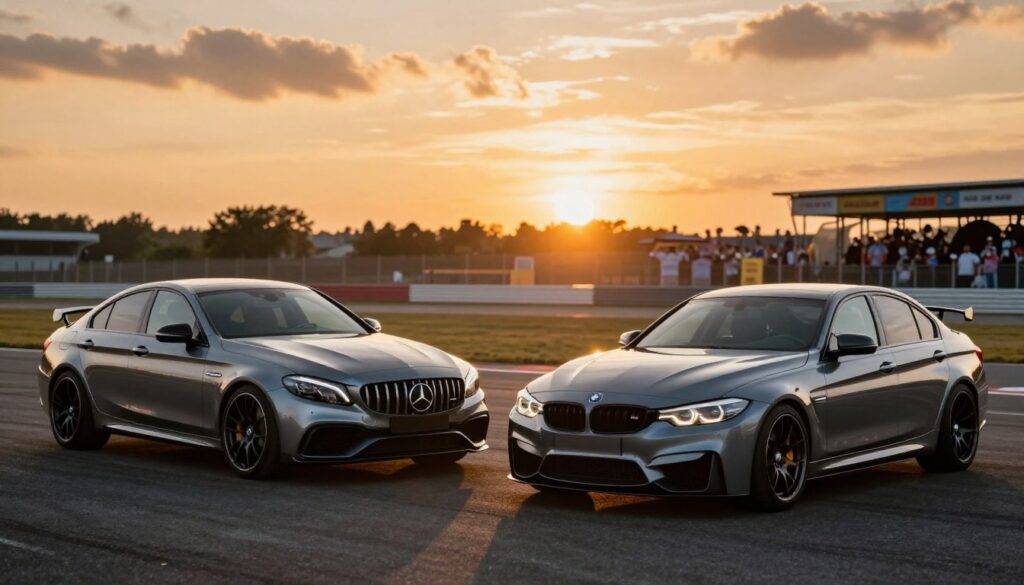
Comparing Performance Sedans: Mercedes AMG C63 vs BMW M3
The rivalry between the Mercedes AMG C63 and the BMW M3 is a true high-performance car showdown. These cars are the best of their brands, showing what a compact sedan can do.
Powertrain Specifications and Acceleration
The latest versions of these cars show a big difference in how they’re made. The Mercedes AMG C63 uses a complex hybrid-four-cylinder setup for better electric torque and efficiency. On the other hand, the BMW M3 sticks with a twin-turbocharged inline-six engine.
“The soul of a performance car is found in how it delivers power to the pavement, regardless of the number of cylinders under the hood.”
Looking at amg vs m series specs, we see clear differences. The M3 gives a traditional, linear power feel that fans love. The AMG, with its electric motor, offers instant, aggressive acceleration that’s unique in its class.
| Feature | Mercedes AMG C63 | BMW M3 |
|---|---|---|
| Engine Type | 2.0L I4 Hybrid | 3.0L I6 Twin-Turbo |
| Drivetrain | 4MATIC+ AWD | xDrive AWD |
| Focus | Hybrid Innovation | Mechanical Precision |
Transmission and Drivetrain Configurations
Both cars use all-wheel drive to handle their power. Mercedes has the 4MATIC+ system for maximum grip with a rear-biased feel. BMW’s xDrive system is known for switching between all-wheel drive and rear-wheel drive.
These systems change how the cars start from a stand. The 4MATIC+ system is very planted, making it easy to get the car’s full power. The xDrive system, though, offers a more engaging experience for those who like to fine-tune their driving.
Track Performance and Daily Usability
These sedans aim to balance track performance with daily comfort. The BMW M3 is great as a dual-purpose machine, with a suspension that’s firm for the track but soft for US highways. The AMG C63 focuses on luxury, making long drives more comfortable.
In the end, performance car reviews show there’s no clear winner. It depends on whether you prefer the AMG’s hybrid tech or the M3’s balanced character. Both cars are the top of modern car engineering.
The SUV Showdown: Mercedes AMG GLE 63 vs BMW X5 M
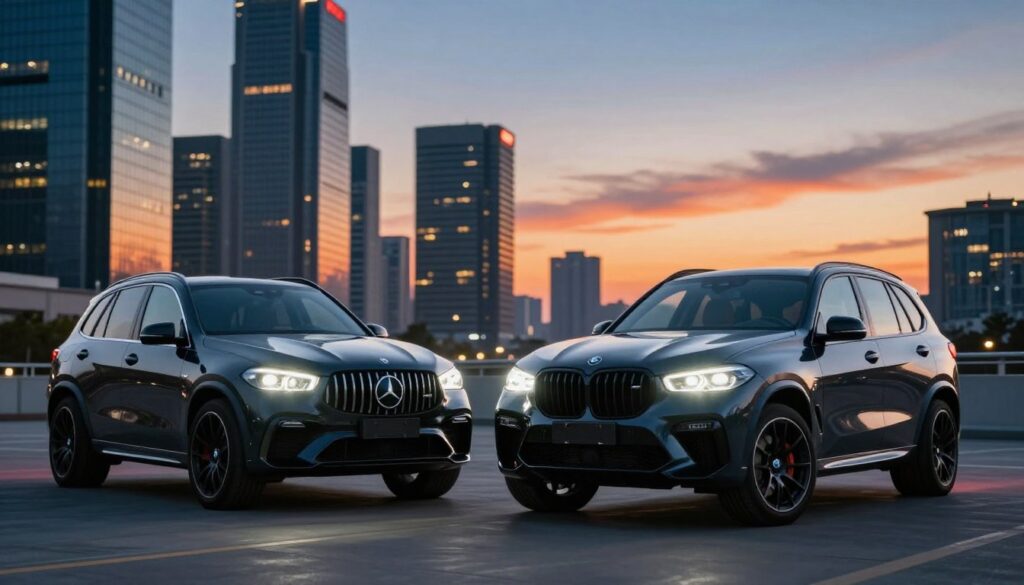
The luxury SUV market is fierce, with the Mercedes AMG GLE 63 and BMW X5 M leading the charge. This high-performance car showdown shows how these brands push limits in heavy vehicles. They aim to offer supercar speed and family-friendly versatility.
Utility and Cargo Capacity
Examining these SUVs, I focus on their daily use. Both have spacious interiors but differ in cargo management.
- The Mercedes AMG GLE 63 has a refined cabin with luxury and flexible seating.
- The BMW X5 M has a driver-focused design without losing rear-seat space or trunk room.
- Both have power tailgates and low load floors, perfect for shopping or trips.
Suspension Tuning and Ride Comfort
Finding the right balance between stiffness and comfort is tough. The Mercedes AMG GLE 63 offers a composed and plush ride with advanced air suspension. The BMW X5 M, on the other hand, is sharper, connecting you more to the road.
The Mercedes is ideal for a smooth, executive experience. The BMW is perfect for those who love a sporty feel during driving.
Off-Road Capabilities and All-Wheel Drive Systems
In the US, you face many weather conditions. Both SUVs have advanced all-wheel drive systems for better traction.
The Mercedes 4MATIC+ system ensures stability on slippery surfaces. The BMW xDrive system has a rear-wheel bias for a more engaging driving experience. While not for rock crawling, both handle light trails and bad weather well. This high-performance car showdown shows you can have both power and practicality.
Luxury and Interior Craftsmanship: A Comparative Analysis
The interior of these German cars shows what each brand is all about. In a luxury car comparison, we see both focus on the driver. Yet, they each have their own style.
Material Quality and Cabin Aesthetics
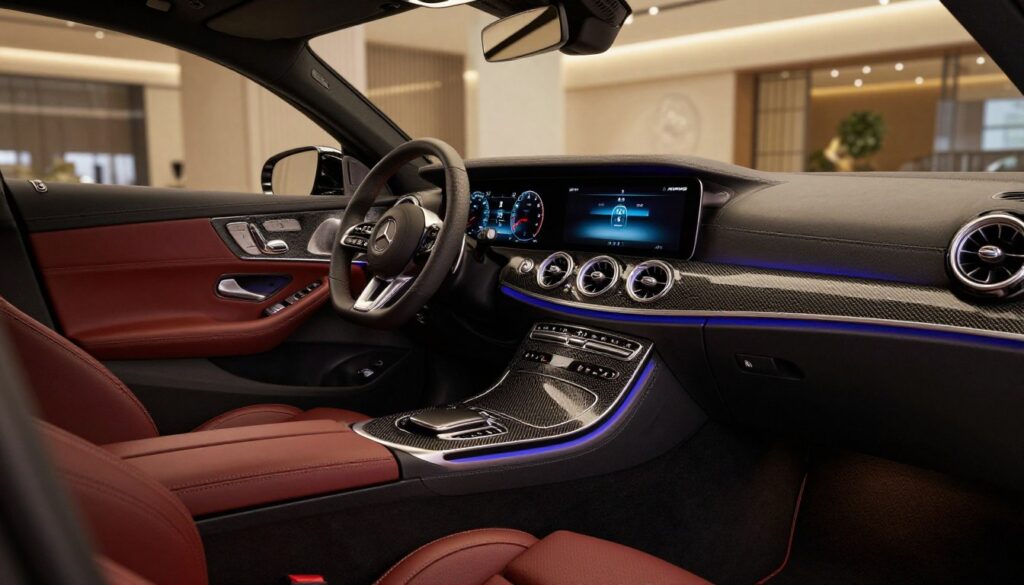
Mercedes-AMG uses bright lights and shiny surfaces for a modern look. They use top-notch Nappa leather and metal details that feel great.
BMW M, on the other hand, goes for a sporty feel. They use carbon fiber and Alcantara to show off the car’s racing roots. This luxury car features comparison shows BMW’s focus on a driver’s tool, while AMG aims for luxury and power.
Seating Comfort and Ergonomics
For long drives, a good seat is key. AMG seats adjust well for different body types and offer great support. They’re easy to use, putting controls right where you need them.
BMW M seats are more aggressive, keeping you in place during fast turns. They support well but might be too firm for some. It’s a trade-off between stability on the track and comfort on long trips.
| Feature | Mercedes-AMG | BMW M |
|---|---|---|
| Primary Aesthetic | Modern Opulence | Athletic Precision |
| Common Materials | Nappa Leather/Metal | Carbon Fiber/Alcantara |
| Seat Feel | Plush & Supportive | Firm & Bolstered |
| Ergonomic Focus | User-Friendly Tech | Driver-Centric Layout |
Driving Dynamics and Handling Characteristics
The german sports car rivalry shines on winding mountain roads. Each turn is a chance to see how these cars respond to the driver. BMW and Mercedes take different approaches to achieving top performance.
Steering Feedback and Road Connection
Steering is key, and I look for feedback from the front tires. BMW M cars offer a nimble, communicative steering feel. This makes them precise in tight corners.
AMG cars, on the other hand, have a heavier, more direct steering. This gives a sense of unwavering stability at high speeds. It’s great for long American highways. Reviews show it’s a matter of personal taste between agility and authority.

Here are the main differences in handling:
- BMW M: Focuses on balance and a light, easy-to-turn feel.
- Mercedes AMG: Offers a solid, confident feel that inspires trust through grip.
- Shared Trait: Both use advanced dampers to adjust to road surfaces quickly.
Braking Performance and Stopping Power
Stopping power is as important as speed when driving hard. I’ve tested both brands under heavy braking. Both use fade-resistant hardware for safety and control.
BMW M cars have a progressive pedal feel, perfect for trail-braking. AMG cars have a quick, strong bite that’s reassuring. Both have big rotors and strong calipers for extreme heat.
The german sports car rivalry keeps improving what’s possible in cars. Whether you prefer the precision of an M car or the power of an AMG, the engineering is top-notch.
Technology, Infotainment, and Driver Assistance Systems
When I check out high-end German cars, the digital setup is key. In this luxury car features comparison, I examine how they blend tech into driving. Both brands have moved past simple controls to create digital hubs.
MBUX vs iDrive: User Interface Comparison
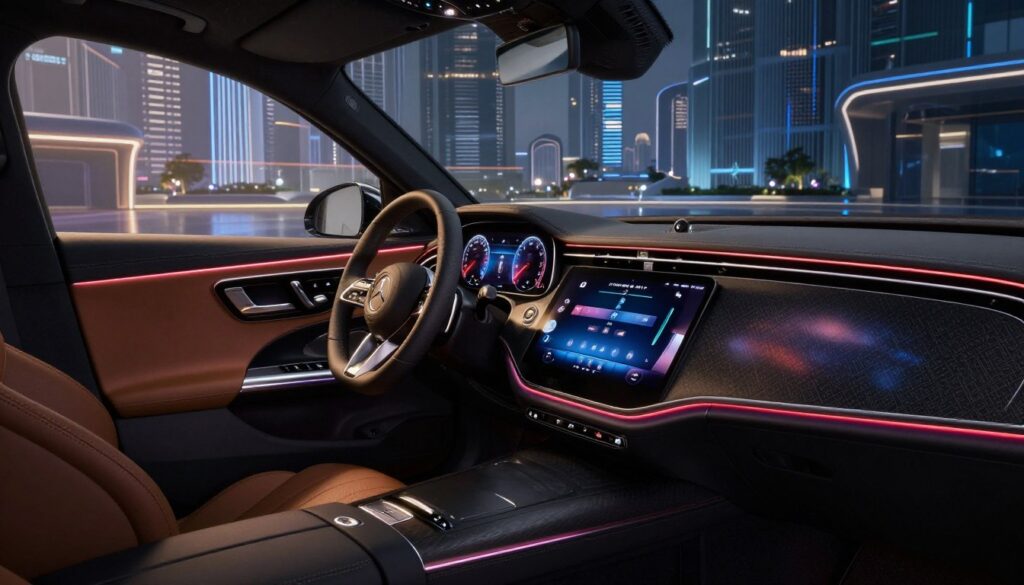
Mercedes-Benz uses MBUX, focusing on visual flair and clear displays. The “Hey Mercedes” voice assistant is easy to use for setting climate and navigation. The system uses touchscreens and augmented reality to help navigate city streets.
BMW’s iDrive system, on the other hand, puts driver-centric ergonomics first. I like the physical iDrive controller for quick menu access without looking away. It’s more responsive during fast driving, keeping important info always available.
Advanced Safety Features for US Roads
Safety tech is key in any luxury car features comparison for American buyers. Both brands offer top-notch safety suites for highway and heavy traffic. Their adaptive cruise control systems can stop and go, perfect for city traffic.
Lane-keeping assist and blind-spot monitoring add security on highways. Both systems correct smoothly, avoiding harsh movements. These features help reduce driver fatigue on long US trips.
| Feature Category | Mercedes-Benz MBUX | BMW iDrive |
|---|---|---|
| Primary Input | Touchscreen & Voice | Rotary Dial & Touch |
| Voice Assistant | Highly Conversational | Task-Oriented |
| Safety Suite | Driver Assistance Package | Driving Assistant Pro |
| Display Style | Cinematic & Vibrant | Clean & Functional |
The choice comes down to your preference. If you like a futuristic aesthetic, Mercedes is great. For tactile precision and road focus, BMW is the top choice in this comparison.
Ownership Costs, Reliability, and Maintenance in the US
Looking at the ownership experience of these German machines, I see a need for proactive financial planning. Owning a high-performance vehicle in the United States is more than just the initial purchase price. It requires a dedicated budget for ongoing care. This german car comparison shows why understanding these costs is vital for any enthusiast.
Typical Maintenance Schedules and Costs
High-performance vehicles need strict service intervals to ensure peak operation. Authorized dealerships in the US often charge a premium for labor. This is a big factor in the mercedes amg vs bmw m series debate. Expect to pay for specialized synthetic oils, high-performance brake components, and complex diagnostic software updates during every visit.
Routine maintenance happens every 10,000 miles or annually, whichever comes first. Skipping these intervals can lead to premature wear on critical engine components. Below is a breakdown of typical costs associated with keeping these vehicles in top condition.
| Service Item | Estimated Cost (AMG) | Estimated Cost (M Series) |
|---|---|---|
| Oil Change | $250 – $400 | $200 – $350 |
| Brake Pad Replacement | $800 – $1,200 | $750 – $1,100 |
| Annual Inspection | $400 – $600 | $350 – $550 |
Common Reliability Concerns for High-Performance Models
As these vehicles age, they often develop specific quirks that owners must monitor closely. In my experience, cooling system integrity is a frequent point of failure for both brands. Plastic components in the cooling loop can become brittle over time, leading to leaks that require immediate attention.
Electronic gremlins also represent a common challenge in this german car comparison. With the high density of sensors and control modules, minor software glitches can occasionally trigger warning lights on your dashboard. I recommend keeping a contingency fund for these unexpected repairs to ensure your mercedes amg vs bmw m series ownership remains a positive experience.
Resale Value and Long-Term Depreciation Trends
Buying a car from the top high-end car brands is more than just getting a vehicle. It’s investing in something that can change in value over time. Knowing how resale works is key for anyone who loves cars but also wants to save money. I’ve noticed that some high-end cars hold their value better than others.
Market Demand for Used AMG and M Vehicles
The used car market for performance cars is driven by fans who love the raw feel of driving. Cars with natural engines or manual shifts are in high demand. They’re seen as future classics. Buyers are willing to pay more for cars that have been well cared for and have full service records.
“The best way to predict the future value of a performance car is to look at its soul—the engine and the connection it offers the driver.”
Here are some key things to think about when looking at resale value:
- Maintenance Records: Buyers of high-end cars want to see proof of regular care.
- Production Numbers: Cars made in small batches tend to hold their value better.
- Model Desirability: Certain models, like the E46 M3 or the W204 C63, are always in demand.
Factors Influencing Future Value
Many things can affect how much your car will be worth later. As cars move towards electric power, cars with traditional engines are becoming rarer. This rarity can make the top high-end car brands from the past more valuable.
| Factor | Impact on Value | Risk Level |
|---|---|---|
| Limited Production | Positive | Low |
| Electrification Shift | Uncertain | High |
| Service History | Positive | Low |
To keep your investment safe, take good care of your car and stay informed about market trends. Choosing cars with a strong engineering background can help reduce the loss in value. Focus on cars that offer a unique driving experience. These are the ones that will likely keep their appeal for years.
Conclusion
Choosing between Mercedes AMG and BMW M is a big deal for luxury car fans in the U.S. These brands show what top-notch cars are all about. They mix power with everyday use perfectly.
Mercedes AMG gives you a thrilling ride with lots of torque and cool looks. BMW M offers a smooth drive and a strong bond with the road. Both brands make cars that are great for city driving and long trips.
It’s up to you to decide between AMG’s bold engine or M’s balanced ride. I suggest checking out local dealerships to see these cars up close. Driving them yourself is the best way to know which one fits your style.
This guide should help you make a confident choice. Whether you go for BMW’s racing spirit or Mercedes’ luxury, you’re getting a car that stands for excellence.
FAQ
In the mercedes amg vs bmw m series rivalry, which brand is better for daily driving on US roads?
The choice between Mercedes AMG and BMW M series depends on what you value most. Mercedes AMG models are known for their comfort and smooth ride. They handle American roads well.
On the other hand, BMW M series is great for those who love the feel of the road. Their suspension is firmer, making it perfect for enthusiasts.
How do the amg vs m series specs differ when comparing the current C63 and M3?
The debate between the Mercedes AMG C63 S E Performance and BMW M3 is fierce. The C63 S E Performance uses a 2.0L four-cylinder hybrid engine. It produces a lot of torque.
The BMW M3, on the other hand, has a 3.0L twin-turbo inline-six engine. If you prefer a raw engine sound and a lighter car, BMW is better. But if you want hybrid speed, Mercedes is the choice.
Which manufacturer offers the superior interior in a luxury car features comparison?
Mercedes-Benz often wins in interior design with its MBUX Hyperscreen and ambient lighting. BMW, on the other hand, focuses on driver-centric design. Their iDrive system is easy to use while driving.
For a luxury feel, Mercedes AMG is the best. BMW M is for those who want a car that feels like a precision tool.
Are there significant differences in maintenance costs for this german sports car rivalry?
Yes, maintenance costs are a big factor. Both brands need special oils and tires that wear out fast. Mercedes AMG service can be more expensive due to its complex systems.
BMW M owners should watch out for cooling system maintenance to keep their car reliable.
Which brand typically performs better in independent performance car reviews regarding handling?
BMW M is often praised for its handling. It has a better chassis balance and steering feedback. BMW cars, like the X5 M or M3, are easy to toss in corners.
Mercedes AMG has improved its all-wheel-drive systems. But BMW’s mechanical design gives it an edge in cornering speed.
How does resale value hold up for these two performance divisions in the US market?
BMW M models, like those with manual transmissions, tend to hold their value better. But Mercedes AMG’s V8 models are in high demand now.
To keep value, keep service records and mileage low. This is key for both brands.

Hi! I’m Moheen Iftikhar, the creator of «CarPulseMedia» I’m passionate about exploring the latest car trends, automotive technology, and driving tips to help you stay informed and inspired. I share expert guides, car reviews, and practical advice for every auto enthusiast.