


Tesla Autopilot Features: What You Need to Know Today
Did you know over 8 billion miles have been driven using advanced driver-assistance systems? This shows how fast car automation is changing our daily drives in the U.S.
This guide is to help you get the latest on Tesla Autopilot features. It’s key to remember these tools are meant to help, not take over, from the driver.
Constant vigilance is your top job when driving today. I want to help you use these Tesla Autopilot features safely. To master them, you must stay alert and ready to take control anytime.
Key Takeaways
- Advanced driver-assistance systems need you to stay alert and in control.
- Knowing your car’s limits is key for safe driving.
- Technology is a helper, not a full driver replacement.
- Always keep your hands on the wheel and eyes on the road.
- Keep up with software updates to use these tools right.
Overview of Tesla Autopilot Features
Drivers often wonder about the Tesla Autopilot features available today. It’s key to know the difference between basic driver-assistance and advanced automation. Knowing this helps set the right expectations for driving.
What is Tesla Autopilot?
The Tesla Autopilot system is a set of advanced technologies. It helps with steering, accelerating, and braking on highways. But, it doesn’t make the car fully drive itself.
Key Components of the System
The system uses cameras, sensors, and computers to see everything around it. It makes quick decisions to keep the car safe and in its lane.
| Feature Tier | Primary Function | Driver Requirement |
|---|---|---|
| Basic Autopilot | Lane centering & cruise control | Active supervision |
| Enhanced Autopilot | Lane changes & auto-parking | Active supervision |
| Full Self-Driving | Traffic light & stop sign control | Constant monitoring |
Recent Updates and Improvements
Tesla keeps making the Tesla Autopilot system better with updates. These updates improve object detection and braking in traffic. The system gets smarter and more reliable with each update.
How Tesla Autopilot Works
The heart of Tesla Autopilot specifications is a mix of hardware and software. It’s amazing how they work together to make Tesla autonomous driving technology reliable. The car uses many inputs to understand its surroundings in real time.
Sensor Technology Utilized
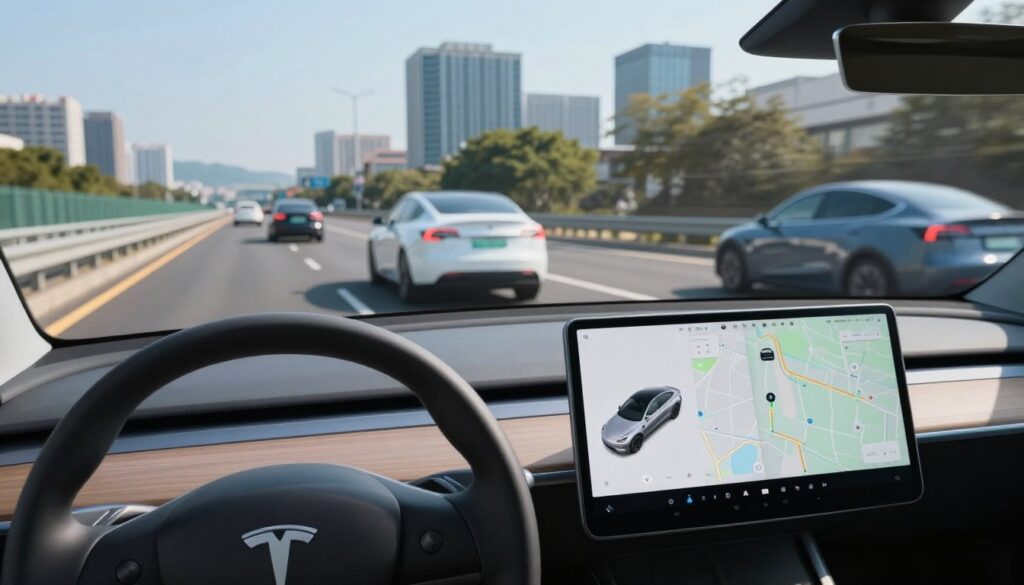
My car has high-resolution cameras for 360-degree visibility. These cameras help spot lane markings, traffic signals, and other cars. Ultrasonic sensors also help by giving data on close objects, which is key for parking and slow movements.
This setup gives the car a full view of the road. It uses visual data and spatial awareness to react quickly to changes. Here’s a table showing the main sensors:
| Sensor Type | Primary Function | Detection Range |
|---|---|---|
| Forward Cameras | Long-range vision | Up to 250 meters |
| Side Cameras | Blind spot monitoring | Up to 80 meters |
| Ultrasonic Sensors | Proximity detection | Up to 8 meters |
Data Processing and Machine Learning
The onboard computer uses machine learning to process sensor data. It’s impressive how it understands complex patterns to make quick driving decisions. This power lets the car identify objects, predict their path, and adjust speed or steering.
The neural networks are trained on vast amounts of driving data. This training helps the car handle different situations, from merging onto highways to navigating city streets. This ongoing learning is what makes Tesla Autopilot specifications so advanced.
Role of Over-the-Air Updates
One big plus of owning a Tesla is getting over-the-air (OTA) updates. These updates improve the car’s logic and safety features without needing a visit to the service center. I get the latest in Tesla autonomous driving technology without hassle.
These updates often enhance the vision system and decision-making algorithms. As the software evolves, the car gets smarter over time. This means my vehicle stays at the forefront of car tech without needing new hardware.
Safety Features of Tesla Autopilot
Safety is Tesla’s main focus. That’s why it has many safety features in its cars. These Tesla Autopilot specifications act like a careful co-pilot. They watch the surroundings to keep everyone safe.

Collision Avoidance System
The collision avoidance system spots dangers early. It uses cameras and sensors to check distances. If it sees a risk, it alerts me with sounds and lights.
Emergency Braking Capabilities
There are times when I might not react fast enough. That’s when the emergency braking kicks in. It’s a key part of Tesla driver-assist features. It helps prevent serious accidents.
Lane Keeping Assistance
Staying in the lane is important for safety. The lane-keeping system checks the lines and adjusts the steering. This keeps the car on track and helps avoid getting tired.
| Feature Name | Primary Function | System Benefit |
|---|---|---|
| Collision Avoidance | Hazard Detection | Prevents Impact |
| Emergency Braking | Automatic Stopping | Reduces Severity |
| Lane Keeping | Steering Correction | Maintains Position |
Driving Assistance Features
The Tesla driver-assist features make long drives easier. They handle routine tasks, letting me focus on the road. The car manages speed and position.
These systems use advanced software and sensors for a better driving experience. They help in heavy traffic or tight parking spots. This makes driving more convenient for today’s drivers.
Traffic-Aware Cruise Control
Traffic-Aware Cruise Control is a key Tesla Autopilot function. It keeps a set speed and adjusts to the car in front. If the car slows, mine does too, keeping a safe distance.
When the path clears, it goes back to the set speed. This is great for city traffic or long highways.
Navigate on Autopilot
Navigate on Autopilot helps on long trips. It suggests lane changes and guides through interchanges. It acts like a co-pilot, making highway driving easier.
I’m in control, but it handles the hard parts like steering and signaling. This makes highway driving less stressful.
Summon Feature Explained
The Summon feature lets the car move on its own in slow places. It’s useful for pulling out of tight spots without getting in the car first.
But, it’s only for low-speed operation. The driver must stay close to watch the surroundings.
User Experience with Tesla Autopilot
Driving with advanced tools changes how I see every mile. I’ve spent a lot of time to get the hang of the Tesla Autopilot system. It’s taught me to always stay alert, even with the tech.

How I Engage with the System
Turning on the system is easy and quick. I just pull down the gear selector stalk once or twice. It feels incredibly intuitive to let the car handle the steering and speed on highways.
Turning it off is simple too. Just a firm tap on the brake or a slight nudge of the wheel does the trick. I always keep my hands near the wheel, ready to take control if needed. This proactive approach makes me feel safe on every trip.
Dashboard Display and Controls
The dashboard shows me what the car sees. I see lane lines, other cars, and even traffic cones in real-time. This visual feedback is essential for building trust in the software.
When I check the Tesla Autopilot functions, I look for the blue lines. If they’re there, the car is tracking the lane. It’s amazing to see the display update as the car spots objects around me.
Feedback from Other Tesla Owners
Many owners agree there’s a learning curve with the tech. New drivers might feel nervous at first, but it gets better with time. Sharing these experiences helps everyone use the system safely.
Experienced users say to always keep your eyes on the road. They also note that the system works best when road markings are clear. By following this advice, I’ve made my driving more consistent and reliable.
Limitations of Tesla Autopilot
Driving today means knowing when tech takes over and when we must step in. My car’s tech is top-notch, but it’s key to remember Tesla vehicle automation isn’t a full driver replacement. It works best as a helper, not a complete driver.
Scenarios where Autopilot Cannot be Used
Some situations are tough for the system. I don’t use it in severe weather like heavy rain or snow. It also struggles with roads that have faded lines or are under construction.
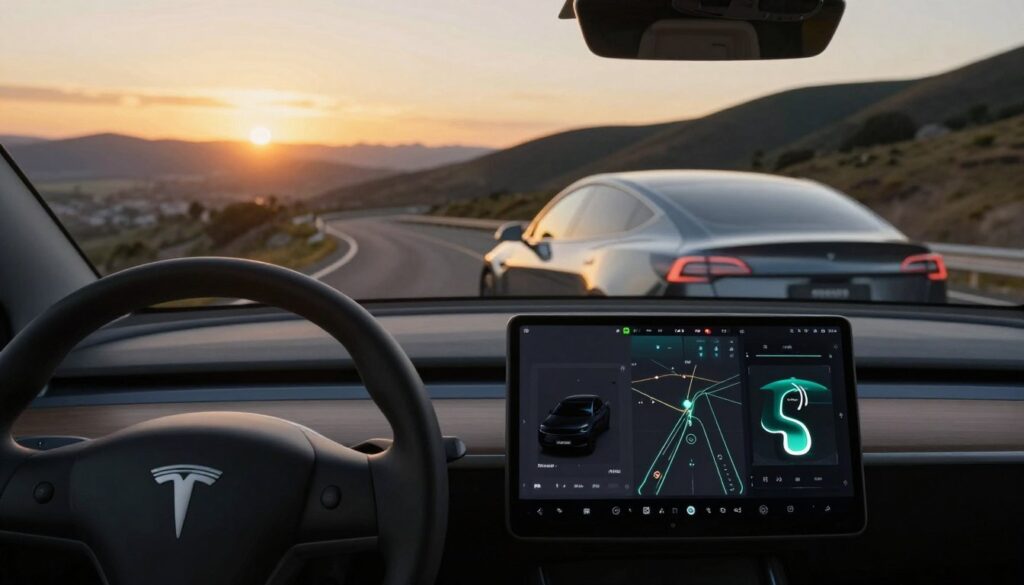
Sharp turns or unpredictable traffic also make the system stop working. It tells me to take control then. Knowing these limits is key for safe use of Tesla Autopilot enhancements.
Understanding the Role of the Driver
As a driver, I always watch the road. Even when the car is driving, I keep my hands on the wheel and eyes on the road. This active engagement lets me react fast if something unexpected happens.
I see the tech as a smart helper, not a full driver. Being alert helps fill the gaps in the software. This approach keeps me safe on every drive.
Notable Incidents and Lessons Learned
Looking back at past incidents teaches us to always be alert. They show that too much trust in tech can be risky. Tesla Autopilot enhancements get better over time, but a human is always needed as a last safety measure.
These lessons are clear: tech isn’t perfect. By understanding Tesla vehicle automation‘s limits, we can enjoy its benefits safely. Knowing how the car handles different situations keeps us safe on the road.
Comparison with Other Autonomous Systems
Understanding modern vehicle automation means knowing how different makers tackle the road. Tesla autonomous driving technology is unique compared to others. While some use expensive hardware, Tesla focuses on a vision-based method for complex environments.
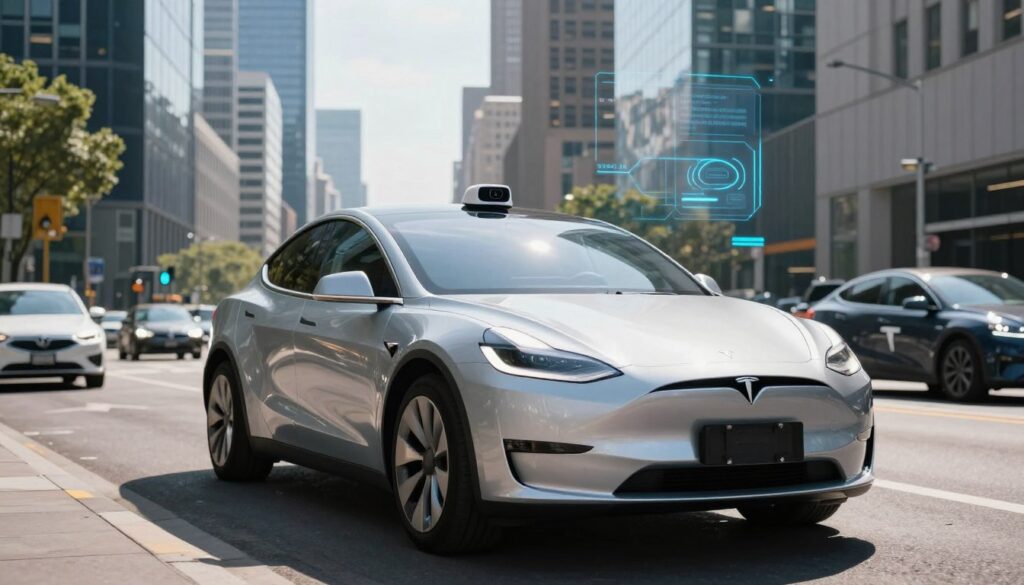
Tesla vs. Waymo
The main difference is in their sensor use. Waymo uses a lot of lidar for detailed 3D maps. Tesla, on the other hand, relies on cameras and neural networks.
Tesla’s vision-based system works well in many places. Waymo is great in urban areas, but Tesla aims for any road.
Differences with Ford BlueCruise
Ford BlueCruise is all about hands-free driving on highways. It has a special camera to keep drivers alert. It’s perfect for long drives.
Tesla advanced driving assistance offers a more complete system. While BlueCruise is good for highways, Tesla handles city streets and intersections better.
Unique Selling Points of Tesla Autopilot
What makes Tesla stand out is its huge fleet of cars. Every mile they drive helps improve the system. This continuous learning loop is unmatched by most.
Also, Tesla’s software gets better over time with updates. This keeps the car competitive without needing a dealership visit.
| Feature | Tesla | Waymo | Ford BlueCruise |
|---|---|---|---|
| Primary Sensor | Cameras (Vision) | Lidar/Radar | Camera/Radar |
| Operational Domain | Global/Any Road | Geofenced Areas | Mapped Highways |
| Learning Method | Fleet Data | Simulation/Mapping | Static Updates |
Future of Tesla Autopilot
The path to full autonomy is speeding up. We’re moving from simple driver aids to systems that understand complex city scenes well.
Upcoming Features and Enhancements
The team keeps improving Tesla Autopilot with new updates. They’re working on better object recognition in dark and busy areas.
Soon, we’ll see smoother stops and more natural starts. These changes will help drivers stay alert on long trips.
The Path to Full Self-Driving
True autonomy needs lots of real-world data. The Tesla self-driving capabilities use a neural network that learns from millions of miles.
“The future of transportation will be defined by the ability of machines to perceive, decide, and act with greater safety than a human driver.”
This ongoing learning is key for handling unpredictable roads. As it gets better, it will manage more complex situations on its own.
Predictions for Autonomous Driving Trends
Regulations will change to support new tech. Governments will create clearer rules for self-driving cars.
Technology will also focus on interconnectivity with smart cities. This will help manage traffic and make roads safer. The move to full autonomy will be slow, based on innovation and trust.
Regulatory Landscape
The fast growth of Tesla self-driving capabilities has left many U.S. traffic laws behind. The legal system is trying to catch up with new tech. This makes technology often exist in a gray area before laws are made.
Current Regulations Impacting Autopilot
There’s no single federal law for self-driving cars. Instead, companies face a mix of state laws and federal guidelines. Safety standards are mainly overseen by the National Highway Traffic Safety Administration (NHTSA). They watch how vehicles perform on public roads.
- State-specific testing permits for autonomous software.
- Federal reporting requirements for collision incidents.
- Ongoing safety audits conducted by government agencies.
Tesla’s Engagement with Authorities
Tesla talks a lot with regulators about Tesla advanced driving assistance. The company shares data to help understand how these systems work. This openness is key for building trust with safety officials.
I think working together is key for success. When companies and policymakers team up, they can make rules that are safe but also let tech grow. This way, new features can meet public needs and follow rules.
Future Challenges in Legislation
The big challenge is figuring out who’s at fault when a system fails. Lawmakers need to decide on liability in complex cases involving Tesla advanced driving assistance. They also need to create standard tests for all self-driving cars.
Getting to fully self-driving Tesla self-driving capabilities will need big changes in laws and insurance. As these cars become more common, I think we’ll see more federal laws. These laws will help make sure everyone is safe on the roads.
Conclusion and Final Thoughts
Using modern driving tech needs a mix of curiosity and caution. My daily drives get better when I know how my car works with the road.
Personal Insights on Usage
I see Tesla’s vehicle automation as a smart tool that needs my full focus. My experience shows it works best when I’m ready to take over quickly. This mix of human insight and machine skill is what travel is like today.
Importance of Staying Informed
I make it a point to read about the latest Tesla Autopilot updates. These updates change how the car handles different roads. Staying informed helps me predict how the system will act on my trips.
Encouragement to Explore Further
I encourage you to test your car’s limits in safe places to boost your confidence. Keep an eye on how these systems improve over time. Your active involvement ensures you get the best from your car while keeping safety first.
FAQ
What are the primary Tesla Autopilot features I should be aware of today?
The main Tesla Autopilot features are Traffic-Aware Cruise Control and Autosteer. These Tesla driver-assist features help with driving’s tough parts. They keep the car moving at a steady speed and in its lane on highways. But, I must always watch the road.
How does the Tesla Autopilot system interpret its surroundings without using Lidar?
The Tesla Autopilot system uses Tesla Vision, a vision-based method. It has high-resolution cameras and smart neural networks. These help the car “see” and react to its surroundings without Lidar sensors.
What is the difference between standard Autopilot and the expanded Tesla self-driving capabilities?
Standard Autopilot helps on highways. But, the advanced Tesla self-driving capabilities (FSD) offer more. They include “Navigate on Autopilot,” “Auto Lane Change,” and “Traffic and Stop Sign Control.” These Tesla Autopilot enhancements are better for city and highway driving. Yet, I must stay alert as a “supervised” system.
How often does Tesla update its Autopilot functions and logic?
Tesla’s Tesla vehicle automation gets better with over-the-air (OTA) updates. They often release patches that improve Tesla Autopilot functions and safety. These updates make my car better without needing a service visit.
What are the key Tesla Autopilot specifications regarding safety and emergency response?
The Tesla advanced driving assistance suite has many safety layers. It includes Automatic Emergency Braking, Forward Collision Warning, and Blind Spot Monitoring. These systems help by acting as a safety net, intervening if they see a collision.
How does Tesla autonomous driving technology compare to competitors like Waymo or Ford?
Tesla’s Tesla autonomous driving technology is different from Waymo’s Lidar-heavy approach. Tesla’s vision system works anywhere. Ford BlueCruise has specific “Blue Zones” for hands-free driving. But, Tesla’s system works on more roads, though I must keep my hands on the wheel.
Can I use Tesla Autopilot features in any weather condition?
No, Tesla vehicle automation has limits. Rain, snow, fog, or sunlight can block the cameras. In these cases, the Tesla Autopilot features may stop working. I must then take full control of the car.
What is the Summon feature, and how does it fit into Tesla driver-assist features?
Summon lets me move my car with the Tesla app. It’s part of the advanced Tesla self-driving capabilities package. But, I use it carefully in low-speed, private areas where I can see the car.
How does Tesla engage with regulators regarding its Tesla self-driving capabilities?
Tesla talks a lot with the National Highway Traffic Safety Administration (NHTSA) about safety and deployment. This is key for the future of Tesla autonomous driving technology. It helps shape laws for automated vehicles in the U.S.
What should I expect from future Tesla Autopilot enhancements?
Future Tesla Autopilot enhancements will aim for full autonomy. They will train neural networks on bigger datasets. This will help with complex city driving, like unprotected left turns and roundabouts. The goal is for Tesla vehicle automation to be fully autonomous.

Hi! I’m Moheen Iftikhar, the creator of «CarPulseMedia» I’m passionate about exploring the latest car trends, automotive technology, and driving tips to help you stay informed and inspired. I share expert guides, car reviews, and practical advice for every auto enthusiast.