


Autonomous Tesla Progress: What You Need to Know Now
Did you know over 90% of all traffic accidents in the United States are caused by human error? This is why the fast autonomous Tesla progress is more than a tech trend. It could change our daily commutes.
I’ve seen these vehicles grow from simple tools to complex machines. They can now handle tough urban environments. As they get better, they will change how we use roads and highways.
It’s important to understand this technological shift for every driver. In this article, I’ll explain the current state of self-driving features. I’ll also talk about what they mean for your future driving. We’re on the edge of a new era in transportation. Staying informed is key.
Key Takeaways
- Human error causes most vehicle accidents on American roads.
- Self-driving tech is moving fast from tests to everyday use.
- Keeping up with these changes helps drivers get ready for new safety standards.
- Modern car software is changing how drivers and cars interact.
- This guide will help you understand the complex world of vehicle automation.
Overview of Tesla’s Autonomous Driving Journey
Tesla has grown from making electric cars to leading in autonomous driving innovation. It started with a simple goal: to make electric cars desirable and high-performing. Then, it aimed to remove the human driver from the car.
A Brief History of Tesla’s Development
At first, Tesla focused on electric powertrains. The Model S was the first to use advanced sensors. This marked the start of Tesla’s journey towards self-driving vehicles.
The first Autopilot was basic, with features like cruise control and lane-keeping. But it laid the groundwork for more advanced systems.
Key Milestones in Autonomy
Tesla has hit several key points in its journey. Switching to Tesla Vision was a big step. It moved from using radar and lidar to cameras.
The table below shows how the hardware has evolved:
| Hardware Version | Primary Sensor Type | Processing Power |
|---|---|---|
| Hardware 1 | Camera & Radar | Low |
| Hardware 2.5 | Enhanced Cameras | Moderate |
| Hardware 4.0 | High-Res Cameras | Very High |
The Vision Behind Tesla’s Self-Driving Technology
The idea behind Tesla’s tech is that AI can see better than humans. It uses billions of miles of data to train its AI. This data-driven approach makes Tesla different from other car makers.
The ultimate goal is to make self-driving vehicles safer than any human. Every update is aimed at this goal. The journey is complex, but the foundation is strong.
Current State of Tesla’s Autonomous Driving Features
It’s key to know the difference between standard and advanced features in Tesla cars. Understanding Tesla technology means seeing how it works on the road. This helps set the right expectations for your daily drive.
Full Self-Driving (FSD) Capabilities
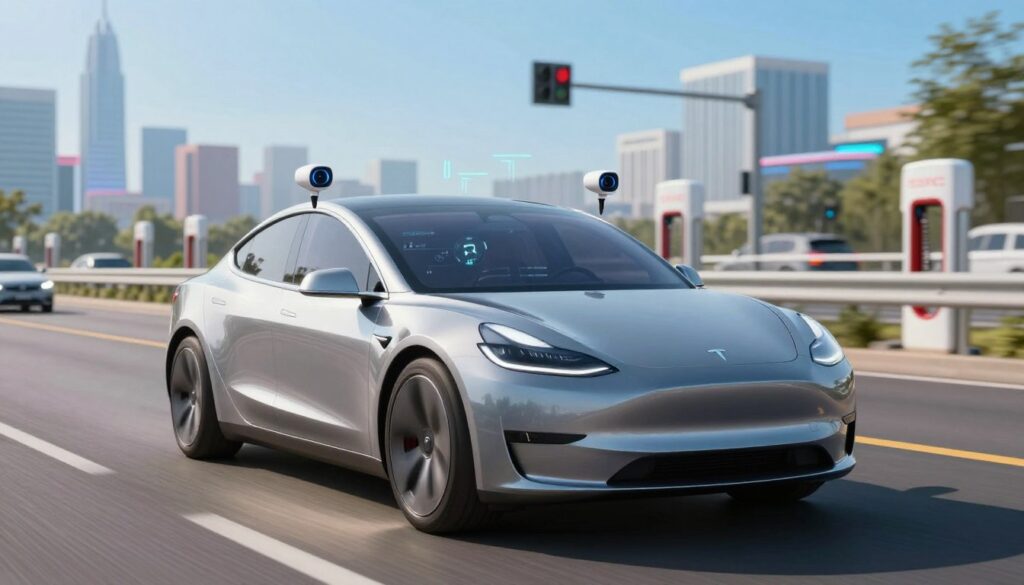
The Full Self-Driving suite is the top level of Tesla technology for the public. It’s made for handling tough driving tasks, like city streets and traffic lights.
When it’s on, the system controls steering and speed in cities. But, the driver must stay alert at all times. The car needs constant watch to stay safe in changing traffic.
Autopilot: What Does It Offer?
Standard Autopilot is the base for Tesla’s driver help features. It mainly works on highways, with Traffic-Aware Cruise Control and Autosteer to keep the car in its lane.
This Tesla technology is great for long trips on clear roads. It cuts down on driver tiredness by controlling speed and steering. But, it doesn’t handle city streets like the premium suite does.
Comparing FSD and Autopilot
To see how these systems vary, I’ve made a comparison table. It shows what each software level can do.
| Feature | Basic Autopilot | Full Self-Driving |
|---|---|---|
| Highway Steering | Included | Included |
| Traffic-Aware Cruise | Included | Included |
| City Street Navigation | Not Available | Included |
| Traffic Light Control | Not Available | Included |
Safety Improvements Through Autonomous Technology
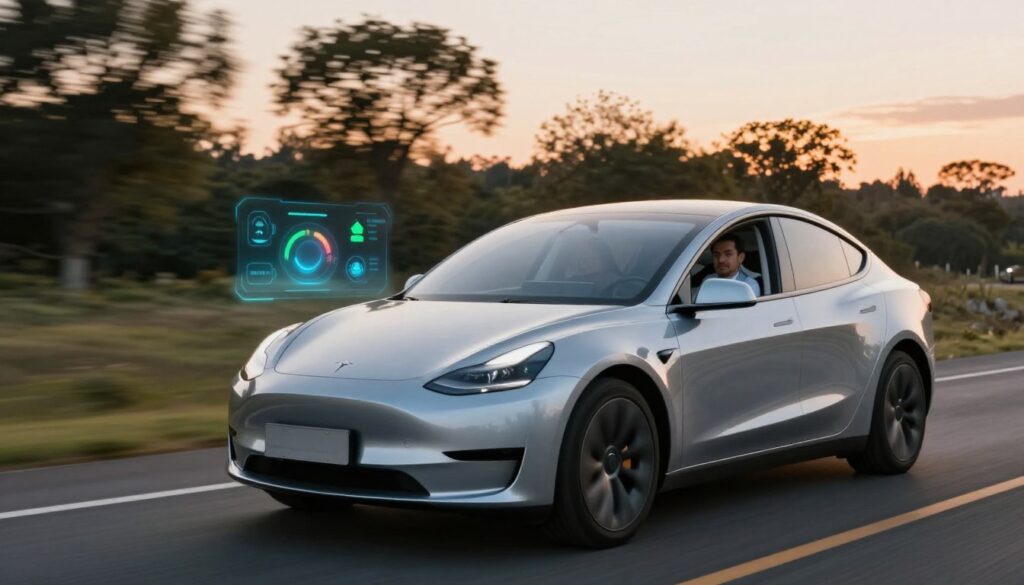
The biggest change in cars is the move to safety systems that act ahead of time. With cutting-edge autonomy, cars are not just waiting for drivers to react. They watch the road and try to stop danger before it happens.
Impact on Accident Reduction
Most crashes in the US are caused by driver mistakes. Things like being distracted or tired can lead to serious accidents. Cutting-edge autonomy keeps a constant watch, better than any human.
These systems don’t get tired or get distracted by phones. They can automatically brake and steer, making crashes less likely. This change is key to making roads safer for everyone.
Safety Features Incorporating AI
Today’s cars use advanced AI to watch the world around them. They use cameras, radar, and sensors to spot dangers like people or cars stopping suddenly. Proactive intervention is what this tech is all about.
If danger is near, the car can brake or steer to avoid it. This seamless integration of tech and car ensures safety. It’s like having a safety net for drivers.
Real-World Data on Safety Performance
Improving these safety features depends on lots of data from real driving. Every mile adds to the learning of the car’s systems. This learning makes cutting-edge autonomy better over time.
It’s amazing how the car gets better based on real experiences, not just tests. This data-driven way means updates can make all cars safer faster. Here’s a table showing the difference between old safety and new AI safety.
| Feature | Traditional Safety | AI-Driven Safety |
|---|---|---|
| Reaction Time | Human-dependent (slow) | Millisecond precision |
| Monitoring | Limited to driver view | 360-degree coverage |
| Adaptability | Static protocols | Continuous learning |
| Hazard Detection | Reactive | Proactive |
Regulatory Challenges and Progress
Understanding the legal world is key for electric vehicle advancements in the U.S. The journey to full autonomy depends on both policy and engineering. Technology advances fast, but laws must keep up to ensure safety.
FDA Regulations Affecting Autonomous Cars
Many think the FDA controls car safety. But, the National Highway Traffic Safety Administration (NHTSA) leads on electric vehicle advancements and self-driving tech. They set safety standards for all cars.
These rules are a safety net across the country. Yet, they sometimes lag behind tech updates. I think federal rules will adapt to keep up with AI in cars.
State-Level Regulations and Testing
States also shape how self-driving tech is used. Some states are open to testing, while others require human drivers. This leads to a patchwork where electric vehicle advancements vary by region.
The table below shows how different rules affect new car tech:
| Regulatory Focus | Pro-Innovation States | Safety-First States |
|---|---|---|
| Testing Permits | Streamlined and fast | Rigorous and lengthy |
| Human Oversight | Optional in specific zones | Mandatory at all times |
| Data Reporting | Voluntary sharing | Strict incident reporting |
Engaging with Policymakers
It’s vital for makers and lawmakers to work together. This partnership is the key to moving forward. Together, they can set flexible standards that keep people safe while allowing for new tech.
Lawmakers need solid data to make smart choices. When companies share real data, it builds trust. This way, electric vehicle advancements can help society safely.
Customer Experiences and Feedback
People’s experiences with the Tesla Autopilot system show both its strengths and weaknesses. I’ve looked into what users say to see how it works in real life. It’s clear that people’s input is key in figuring out if it’s ready for the market.
Early Adopter Insights
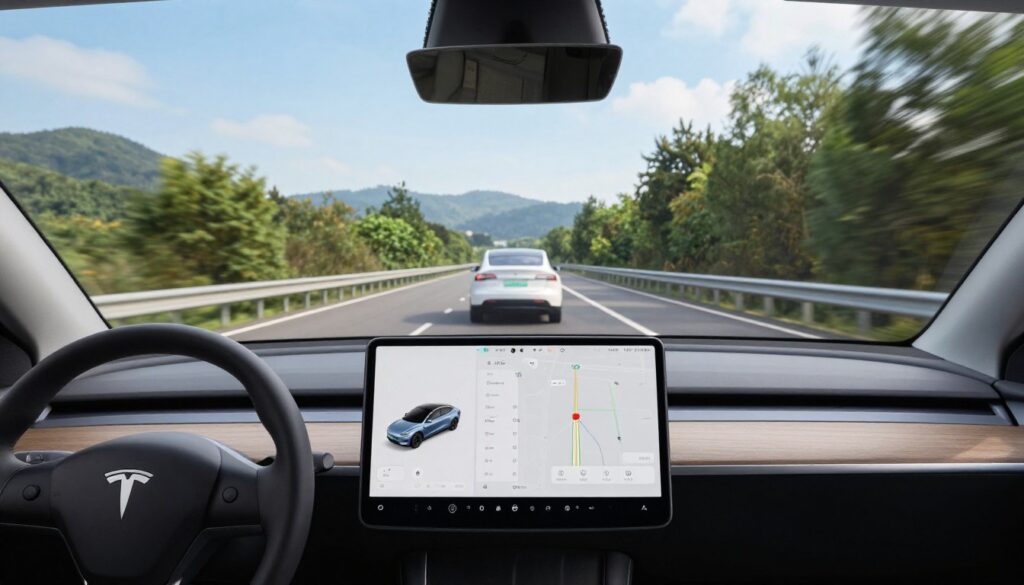
Many who tried it first say it changed their driving. They like how it handles lane changes and keeps speed steady. They see it as a big step towards a better future.
But, they also say it takes time to get used to. Learning when to trust the system and when to take control is a challenge. Most agree that staying alert is essential in the first few months.
Common Concerns from Users
Despite the excitement, there are real worries about the Tesla Autopilot system. Some drivers talk about “phantom braking,” where the car stops suddenly for no reason. These moments show the need for better software.
People also have mixed feelings about the design. The simple dashboard looks good, but some find it hard to get to important safety info fast. Finding a balance between looks and usefulness is a big challenge.
Testimonials on the Driving Experience
Drivers who often travel long distances generally like it. They say the Tesla Autopilot system makes long drives less tiring. Feeling less tired when you arrive is a big plus for those who commute a lot.
“Using the system on long road trips has completely changed my perspective on travel. It allows me to stay focused on the road while the car handles the repetitive tasks with remarkable consistency.”
The table below shows what people usually say about the system in different situations:
| Driving Scenario | Performance Rating | User Sentiment |
|---|---|---|
| Highway Cruising | High | Very Satisfied |
| Urban Traffic | Moderate | Cautious |
| Night Driving | Moderate | Vigilant |
| Heavy Rain | Low | Concerned |
The Role of AI in Tesla’s Automation
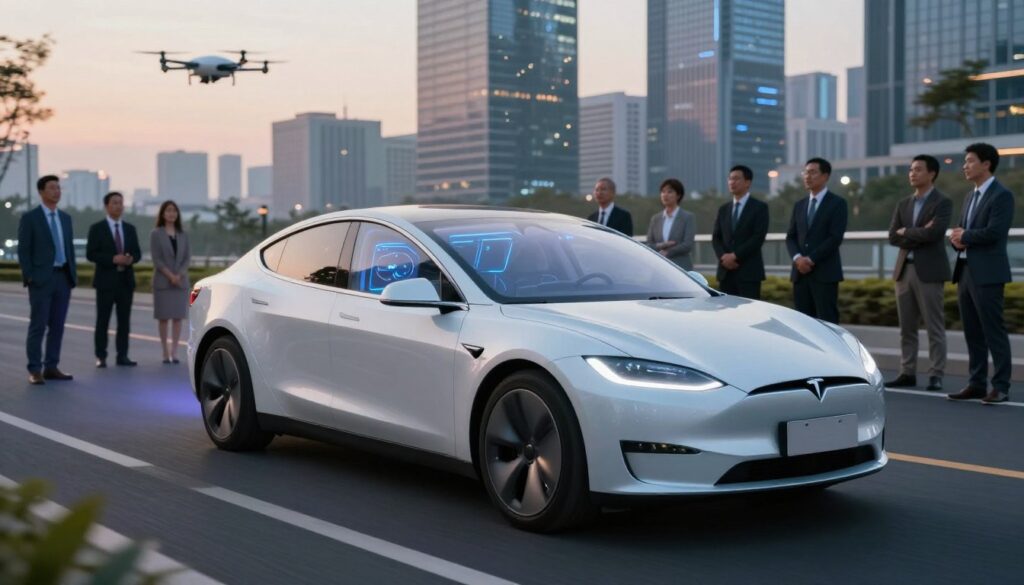
I often marvel at how Tesla technology turns raw data into quick driving decisions. It works like a human brain, scanning for dangers and navigating traffic.
Machine Learning Algorithms in Use
The car uses advanced machine learning to understand its surroundings in real-time. It combines data from cameras, sensors, and radar to map out the environment.
Thanks to deep learning, it can spot different objects with great accuracy. This lets the car:
- See traffic signals and stop signs.
- Spot pedestrians and cyclists, even in the dark.
- Guess how other cars will move.
Neural Networks Behind Tesla’s Perception
The heart of this Tesla technology is its neural networks. These networks learn from huge datasets to catch things humans might miss.
“The goal is to build a system that perceives the world with more accuracy and speed than any human could ever achieve.”
This layer is key for safety. It helps the car stay in its lane and adjust speed with traffic, making driving smooth and predictable.
Continuous Learning from Data Collection
The fleet’s collective intelligence is truly impressive. Every unique scenario is recorded and shared with the cloud.
This Tesla technology uses this data to improve its algorithms for all cars. This continuous learning makes the system smarter every day.
This ongoing improvement is what makes the platform stand out. By learning from millions of miles, the software gets better at handling complex situations.
Future Roadmap for Tesla’s Autonomous Driving
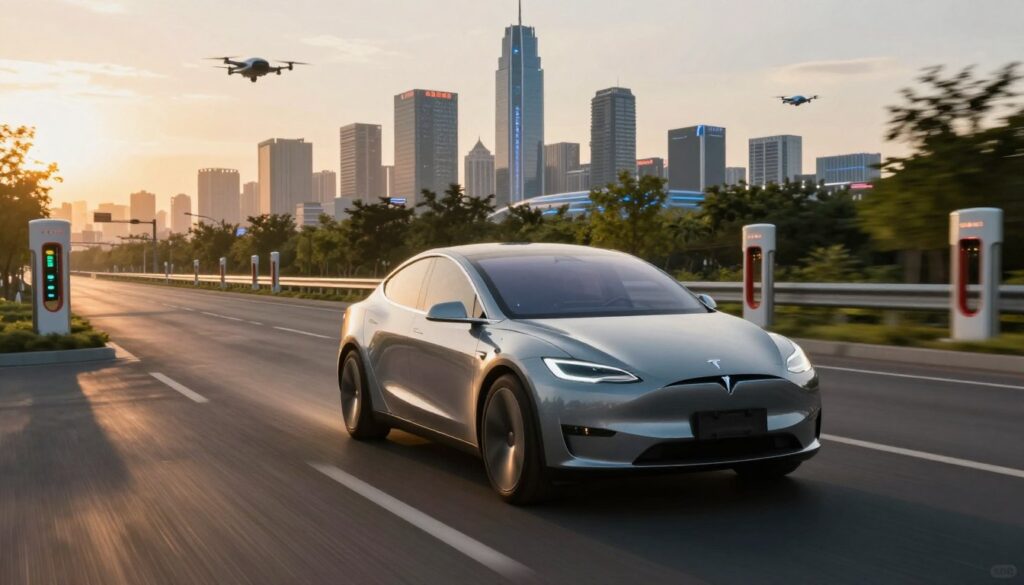
We are on the edge of a big change in how we travel, thanks to Tesla’s work on self-driving cars. The company is working hard to make cars that can drive on their own. In the next few years, we will see big updates in software and hardware.
Upcoming Features and Updates
Tesla is making its cars smarter to handle tough driving situations. They are working on software that will help cars drive better in bad weather and busy cities. This is all part of making cars that are truly self-driving.
- Enhanced vision-based processing for better object detection.
- Improved path planning in construction zones and roundabouts.
- Integration of real-time traffic data for smoother navigation.
Timeline for Full Autonomy
It’s hard to say exactly when cars will drive on their own without any help. But, we can see that Tesla is getting closer to making this happen. The whole industry is watching to see when cars will be better at driving than people.
“The goal is to create a system that is significantly safer than a human driver, which is the ultimate benchmark for success in this field.”
Tesla’s Long-Term Goals
Tesla wants to change how we move around cities with its self-driving tech. They dream of a future where cars drive people around instead of everyone owning their own car. This could make cities better for everyone by making traffic flow smoother and using cars more efficiently.
| Goal Category | Primary Focus | Expected Impact |
|---|---|---|
| Safety | Accident Prevention | Lower Insurance Costs |
| Efficiency | Traffic Optimization | Reduced Commute Times |
| Accessibility | Autonomous Fleets | Increased Mobility Options |
The Competitive Landscape of Autonomous Vehicles
The car industry is split into two main groups on self-driving tech. Some companies use expensive LiDAR sensors, while Tesla Autopilot system relies on cameras and neural networks. This difference makes for a thrilling competition that shapes the market.
Key Competitors in the Autonomous Space
Many big names are racing to achieve full autonomy. Waymo and Cruise are leading by focusing on robotaxi services in cities. They use detailed maps and many sensors for safety in busy traffic.
- Waymo: Known for its extensive testing in urban environments.
- Cruise: Focused on dense city deployment and ride-hailing integration.
- Zoox: Developing purpose-built autonomous vehicles for passenger transport.
Tesla vs. Major Automotive Brands
Big car makers are taking a slow and careful approach to self-driving. They’re adding advanced features but sticking to traditional car ownership. This shows the clash between new tech and old safety standards.
| Company | Primary Approach | Key Focus |
|---|---|---|
| Tesla | Vision-based AI | Scalable consumer autonomy |
| Waymo | LiDAR + Mapping | Robotaxi services |
| Legacy Brands | Hybrid Sensors | Incremental safety features |
Collaborations and Partnerships
The future of cars is also about working together. Car makers and tech companies are teaming up to speed up software and cloud tech. These partnerships help handle the huge data needed for advanced AI.
Together, they aim to overcome big challenges in rules and tech. While Tesla Autopilot system grows with its own data, others are counting on teamwork. This rivalry pushes the industry to make self-driving cars safer and more reliable faster.
Ethical Considerations in Autonomous Driving
As we add AI transportation developments to our lives, we face big ethical questions. Moving to automated systems is more than just a tech problem. It changes how we see blame on the road.
Addressing Moral Dilemmas
One big issue is how cars handle accidents they can’t avoid. When a crash is sure, the car’s software has to choose what to do.
These moral dilemmas make developers put human values into code. They think about:
- Keeping people inside the car safe or saving pedestrians.
- Doing the least harm in busy traffic.
- Being fair and consistent in all driving situations.
Evaluating AI Decision-Making
Being open is key to trust in AI transportation developments. It’s important that how these systems work is clear and checkable.
Now, developers are working hard to make sure these choices are fair and not biased. They use lots of data to improve how cars understand and act around people. This ensures the tech meets safety standards.
Balancing Innovation with Responsibility
Innovation is important, but safety always comes first. The chance to cut down on human mistakes is huge. But we must be careful when we start using these new systems.
“The true measure of progress in autonomous technology is not just speed or efficiency, but the unwavering commitment to the safety of every individual on the road.”
The future of AI transportation developments depends on mixing new tech with ethics. I think focusing on clearness and people-first design can help us solve these problems. This way, we can make a safer, more reliable world for all.
Consumer Adoption Trends
I’ve noticed a big change in how people see self-driving vehicles. What was once seen as science fiction is now real for many. This shows we’re getting used to new tech in our daily lives.
Growing Acceptance of Autonomous Vehicles
People are moving from being very skeptical to being curious. They see the benefits of safety and ease that these vehicles offer. As more people try these features, their fears start to go away.
The growth of AI transportation developments helps too. Seeing these systems work well builds trust. This trust is key for more people to accept full autonomy.
Demographic Insights and Trends
Not everyone is ready for self-driving cars at the same pace. Younger people, who are used to tech, are more open to it. They see it as a useful upgrade.
Older folks want to know these cars are safe and reliable. As more data shows they are, they start to get on board. Teaching them about these cars is important.
The Influence of Urbanization
Cities are facing big problems like traffic and parking. Self-driving cars offer a solution. I think cities will be the first to try these out.
The table below shows what affects adoption in different places.
| Factor | Urban Impact | Suburban Impact | Rural Impact |
|---|---|---|---|
| Traffic Density | High | Moderate | Low |
| Parking Demand | Critical | Moderate | Minimal |
| Tech Readiness | High | Moderate | Low |
| Adoption Speed | Fast | Moderate | Slow |
Adding self-driving vehicles to cities will change how we build them. As AI transportation developments get better, we’ll expect them in our daily commute.
Environmental Impact of Autonomous Tesla Vehicles
Autonomous Tesla vehicles offer more than just convenience. They mark a big step towards a greener future. These electric vehicle advancements are key to changing how we move around.
Reducing Carbon Footprint
Autonomous systems make driving more efficient. They use less energy by driving smoothly. This is better than how humans drive.
They also help reduce traffic jams. When cars talk to each other, they move better. This cuts down on pollution.
Tesla’s Commitment to Sustainability
Tesla aims to reduce our carbon footprint. They focus on using clean energy. Their goal is to make electric cars better.
They want to help the world switch to clean energy. Their technology makes every drive as green as possible.
Long-Term Benefits of Autonomous Electric Vehicles
Switching to electric and autonomous cars is good for the planet. It leads to better energy use. This is a big change for the better.
I think these new technologies will greatly help our planet. Adopting them is a big step towards a cleaner world.
Conclusion: The Future of Autonomous Tesla
Tesla is changing the car world with its focus on making cars drive themselves. The progress we see today shows a big change in how we think about driving and staying safe on the road.
Reflecting on Key Developments
The path to fully automated cars is filled with updates and lots of data. Using neural networks is key to making these cars better at understanding their world. This is a big part of what’s happening in the world of Tesla cars today.
My Perspective on Current Achievements
The tech we have now is a result of Tesla’s amazing engineers. While it’s very promising, we need to be patient and test it a lot. We must find a balance between moving fast and keeping everyone safe.
Anticipating Future Milestones
Soon, we’ll see even better features in Tesla cars. Laws will also change to keep up with these new cars. Keeping up with Tesla’s progress will help you understand the future of driving. Stay tuned for a smarter, safer way to travel.
FAQ
How would I describe the current state of autonomous Tesla progress in the United States?
Tesla’s progress is at a key point, moving from simple driver help to complex tasks. The use of big data is speeding up the improvement of self-driving cars. This makes them better at handling different driving situations in America.
What is the core vision behind Tesla’s self-driving technology journey?
Elon Musk’s vision is for safer, more efficient travel by removing human mistakes. The Tesla Autopilot system is the start of this journey. It aims to make cars smart assistants that handle driving tasks.
How do I distinguish between standard Autopilot and Full Self-Driving (FSD) capabilities?
Autopilot is for highway help, like traffic-aware cruise control. Full Self-Driving (FSD) is the top level, with features like navigating city streets. Autopilot does the basics, while FSD shows the AI’s advanced abilities.
In what ways are these AI transportation developments improving road safety?
Advanced autonomy is a safety layer that spots dangers before humans can. It uses 360-degree monitoring to prevent crashes. This is a big step in making roads safer.
What are the primary regulatory hurdles for electric vehicle advancements in the autonomous space?
The rules are complex, with state and federal laws. For self-driving cars to be widely used, clear rules are needed. These rules must support innovation and ensure safety.
What does the feedback from early adopters tell me about the Tesla Autopilot system?
Early users like the system for long trips, as it cuts down on driver tiredness. But, there are issues like “phantom braking” and a need for easier use. This shows Tesla’s tech is groundbreaking, but it’s not perfect yet.
How do neural networks and machine learning power Tesla’s autonomous driving innovation?
The car’s computer is like a brain, using neural networks to understand what it sees. This learning from millions of drivers makes the system better over time. It can handle complex situations and learn from them.
What is my perspective on the future roadmap for Tesla’s self-driving vehicles?
I think the future will see cars that can drive without humans. The timeline is debated, but the progress suggests we’ll see big changes soon. This will change how we see travel and personal transport.
How does Tesla compare to other major brands in the autonomous driving innovation landscape?
Tesla uses cameras, while others like Waymo or General Motors’ Cruise use LiDAR. Tesla aims for a global solution, unlike others who focus on specific areas. This makes Tesla’s approach unique and bold.
What ethical considerations must I account for with autonomous Tesla progress?
As we move to self-driving cars, we must think about AI making tough choices in accidents. Tesla focuses on avoiding accidents, but the whole industry must be open about how they prioritize safety and human life.
How is urbanization influencing the adoption of cutting-edge autonomy?
Cities need self-driving cars to solve traffic and parking problems. People in big cities want these cars to make travel easier. This is driving the adoption of electric and self-driving vehicles.
What are the long-term environmental benefits of autonomous Tesla progress?
Electric cars and self-driving tech together are key for the planet. They can cut down on energy use and emissions. This helps make our transportation system more sustainable.

Hi! I’m Moheen Iftikhar, the creator of «CarPulseMedia» I’m passionate about exploring the latest car trends, automotive technology, and driving tips to help you stay informed and inspired. I share expert guides, car reviews, and practical advice for every auto enthusiast.