


Tesla Battery Range Guide for US Drivers in 2024
Did you know over 1.2 million electric vehicles were sold in the US last year? This big move to electric means more people are learning about car power.
Knowing your Tesla battery range is key for a smooth driving experience. Whether it’s cold in the North or hot in the South, understanding your car’s performance is important.
This guide is here to help both new buyers and current owners. I aim to improve your daily driving and explain the tech behind these cars. With clear expectations, you’ll drive with confidence every mile.
Key Takeaways
- Learn how external temperatures impact your vehicle’s efficiency.
- Discover tips to maximize your daily travel distance.
- Understand the difference between estimated and real-world performance.
- Gain insights into charging habits that preserve long-term health.
- Prepare your vehicle for diverse American climates and road conditions.
Understanding Tesla Battery Range
Switching to an electric vehicle made me realize how key battery range is. It’s different from traditional cars. Knowing how far I can go on a charge is essential.
What Determines Battery Range?
The electric vehicle battery range depends on the energy stored in the lithium-ion cells. It’s like a fuel tank, but in kilowatt-hours. The battery management system controls how this energy is used.
The type of battery cells also matters. Advances in cell density have increased power without taking up more space. This is why long-range driving is now possible.
Key Factors Affecting Range
Many things affect EV battery efficiency during my drives. It’s not just the battery. How the car interacts with the world also plays a part. Small changes in driving can make a big difference.
Here are the main factors that affect energy use:
- Aerodynamics: High speeds increase wind resistance, making the motor work harder.
- Tire Pressure: Properly inflated tires reduce resistance, making the car more efficient.
- Regenerative Braking: This feature captures energy during braking and adds it to the battery.
- Climate Control: Using the heater or air conditioning uses battery power.
The Importance of Range in EV Adoption
For many, the electric vehicle battery range is key when choosing an electric car. Knowing the car can reach its destination without frequent stops is important. Understanding how my driving affects EV battery efficiency makes me feel more in control.
Switching to electric is more than saving on fuel. It’s about a new way of using technology. As I learn more, the switch becomes easier and more rewarding.
Tesla Models and Their Ranges
I aim to guide you through the Tesla lineup in the U.S. Each car has a unique Tesla range per charge. They cater to different needs and driving styles.
Tesla Model S: Luxury and Longevity
The Model S is the top sedan, known for its efficiency and luxury. Its Tesla Model S range is unmatched for long trips.
It’s perfect for those who want power and endurance. It’s great for long drives without needing to stop often.
Tesla Model 3: Balance of Performance and Efficiency
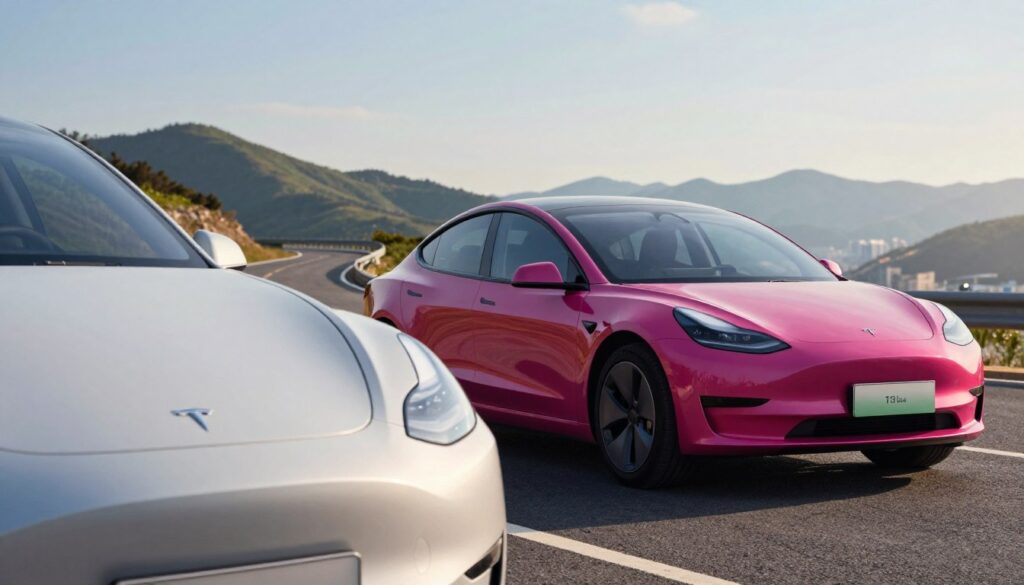
The Model 3 is the entry-level car, blending performance and daily use. Its design boosts efficiency on highways.
It’s perfect for city driving and long trips. It offers a highly efficient driving experience in today’s market.
Tesla Model X: SUV Performance
The Model X is for those needing more space. Its Tesla Model X battery range supports heavy loads and family travel.
It keeps its range high despite its size and weight. It’s a versatile choice for families who want power and distance.
Tesla Model Y: Compact Versatility
The Model Y is popular for its compact size and flexible interior. It’s great for city driving and weekend trips.
Many find it perfect for daily use and adventures. It offers reliable range and cargo capacity.
| Model | Primary Strength | Best Use Case |
|---|---|---|
| Model S | Maximum Range | Long-distance luxury travel |
| Model 3 | Efficiency | Daily commuting |
| Model X | Utility | Family road trips |
| Model Y | Versatility | Urban and suburban life |
Real-World Range vs. EPA Estimates
Understanding the difference between lab tests and real driving is key for car owners. Official numbers give a starting point, but my daily drive often shows a different picture.
Understanding EPA Ratings
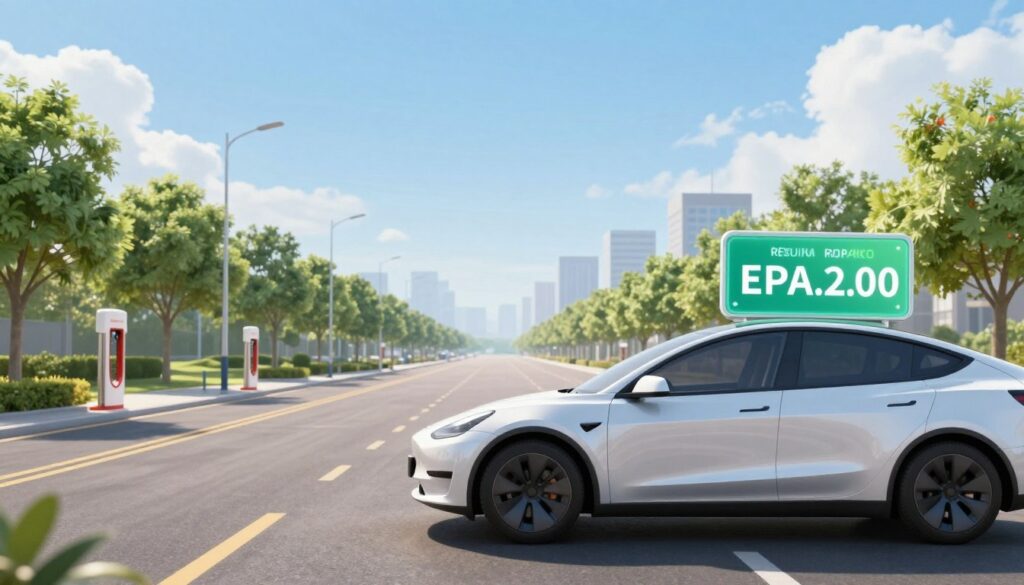
The Environmental Protection Agency tests cars in a controlled setting to find the electric vehicle battery range. These tests are done to ensure fairness across all cars. But, they can’t match the variety of roads I face every day.
These tests are a benchmark, not a promise. They help compare electric vehicle range under perfect conditions. This is useful for shoppers looking at different models.
How Real-World Conditions Affect Range
Many things affect how well long range electric vehicles do. High speeds on the highway use more energy than city driving. Also, very hot or cold weather makes the battery work harder.
My car’s climate control also matters. Using the heater or AC a lot takes power from the battery. These factors often mean I don’t get the range I expect.
Examples of Real-World Range Experiences
To see how driving conditions change my range, I look at different scenarios. Here’s a table showing how long range electric vehicles do in typical situations.
| Driving Condition | Impact on Range | Primary Factor |
|---|---|---|
| Highway Driving (75+ mph) | Moderate Decrease | Aerodynamic Drag |
| Extreme Cold Weather | Significant Decrease | Battery Heating |
| City/Stop-and-Go | High Efficiency | Regenerative Braking |
My electric vehicle battery range changes with how I drive. By adjusting my driving and knowing these factors, I can guess my car’s range better.
Maximizing My Tesla’s Battery Range
To get the most out of my Tesla range per charge, I mix smart driving with regular care. Simple changes in my daily routine have made a big difference. By controlling how I use my car, I make every mile count.
Tips for Efficient Driving
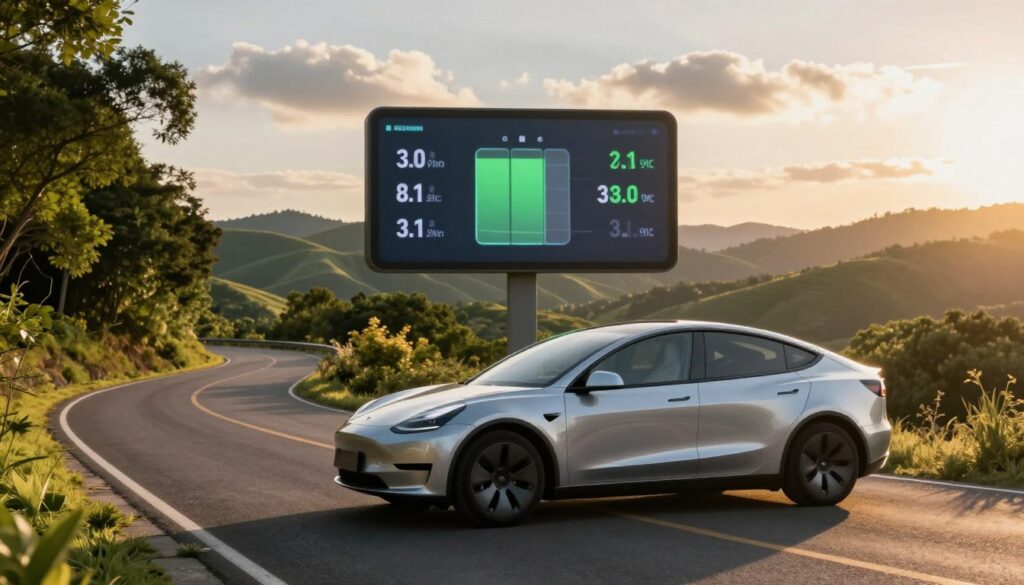
Regenerative braking is key to extending my Tesla battery range. It captures energy when I slow down and puts it back into the battery. This is super helpful in the city.
Driving at a steady speed is also important. Using cruise control on the highway helps me avoid sudden acceleration. This keeps my EV battery efficiency high and saves energy.
Optimal Charging Practices
Charging my car wisely is as important as driving it well. I don’t charge to 100% unless I’m going on a long trip. Keeping the battery between 20% and 80% helps it stay healthy.
Plugging in my car at home is a habit I’ve developed. It lets the car keep its temperature right, which is good for the battery. Regular charging keeps my car ready to go and protects the battery.
Understanding Energy Consumption
I check the energy app on my dashboard often. It shows how my driving, climate control, and terrain affect my Tesla battery range. This helps me adjust to get the best Tesla range per charge.
Knowing these factors lets me make better choices on the road. Whether it’s adjusting the temperature or taking a more efficient route, I’m always looking to improve. This way, I’m sure my car will perform well every time I drive it.
Range Anxiety: Myths vs. Reality
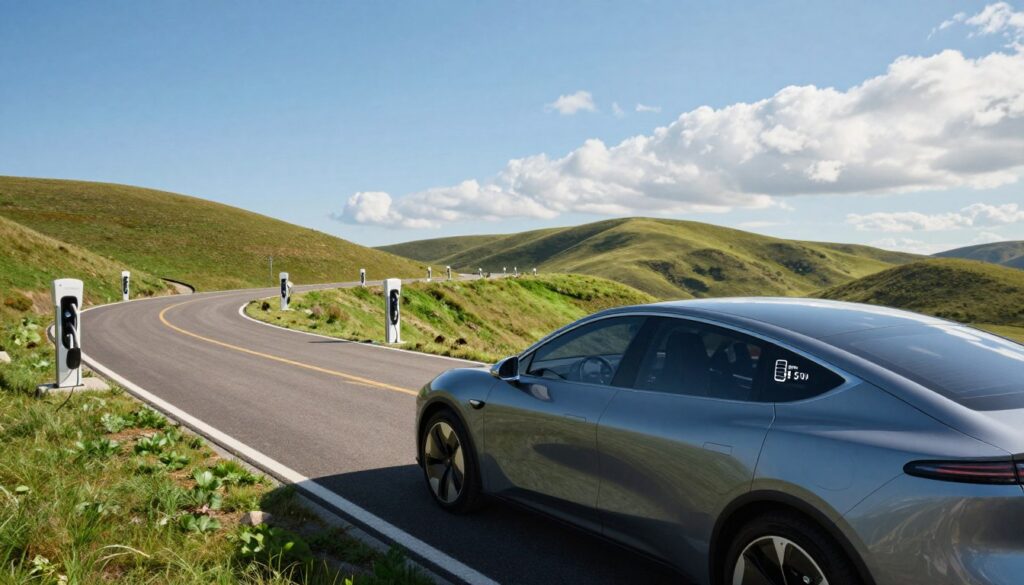
Range anxiety is a big worry for those thinking about electric cars. People fear their electric vehicle battery range won’t last for daily trips or long drives. This fear often comes from not knowing how easy it is to charge modern electric cars.
What Is Range Anxiety?
Range anxiety is the fear of running out of power before finding a charge. It’s a natural worry when switching from gas to electric. But, once you get used to charging every day, this fear usually goes away.
Common Misconceptions
One big myth is that you’ll get stuck without power. But, most cars warn you and help find a charge before it’s too late. Another myth is that the electric vehicle battery range is always the same and doesn’t change with the weather.
Yes, cold weather can affect how far you can go. But, the tech in electric cars is much better than people think. You don’t have to worry about losing charge when parked or on short trips. Reliability is a key feature of today’s electric cars.
How to Overcome Range Anxiety
Here are some tips to feel more confident driving an electric car. Think of charging as topping off, not refueling. Here are some ways to feel at ease:
- Utilize built-in trip planners: Tesla’s system plans your route and finds charging stops for you.
- Understand your charging network: Know how many Superchargers there are to make long trips easy.
- Leverage home charging: Charge at home every morning to avoid mid-trip stops.
- Monitor energy consumption: Use the car’s app to see how your driving affects your electric vehicle battery range.
Using these tools, you’ll see that running out of power is rare. Electric travel is designed to be easy, letting you enjoy the trip without worrying about the battery.
The Future of Tesla Battery Technology
The future of Tesla battery tech is exciting. It will change how I travel every day. Tesla keeps improving, making my car better over time. They use smart engineering to update the hardware.
Upcoming Innovations
New tech will pack more power into smaller spaces. This means longer drives without bigger batteries. It’s a big step towards making electric cars better for long trips.
Charging times will also get faster. This makes electric cars as easy to use as gas cars. Faster charging is key to making electric cars popular everywhere.
Advancements in Battery Chemistry
Better battery chemistry is behind these improvements. Tesla is working to use cheaper materials. This makes electric cars more affordable and sustainable.
New materials also make batteries lighter. A lighter car uses less energy, so it goes further on a single charge. These changes will make electric cars even better.
Potential Over-the-Air Updates
One cool thing about owning a Tesla is getting updates over the air. These updates improve how the battery works. It’s like my car gets better even years later.
These updates make my car more efficient. Tesla uses data from all cars to make these improvements. I’m excited to see how these updates will keep making my car better.
Charging Infrastructure and Its Impact
The true power of my Tesla shines with the wide range of charging spots across the U.S. A reliable way to charge is key for daily drives and long trips. Understanding the ecosystem of chargers lets me plan routes with ease.
Overview of Tesla Supercharger Network
The Tesla Supercharger network is the top choice for fast charging. It’s the standard in electric vehicle range comparison for its reliability and easy integration with my car.
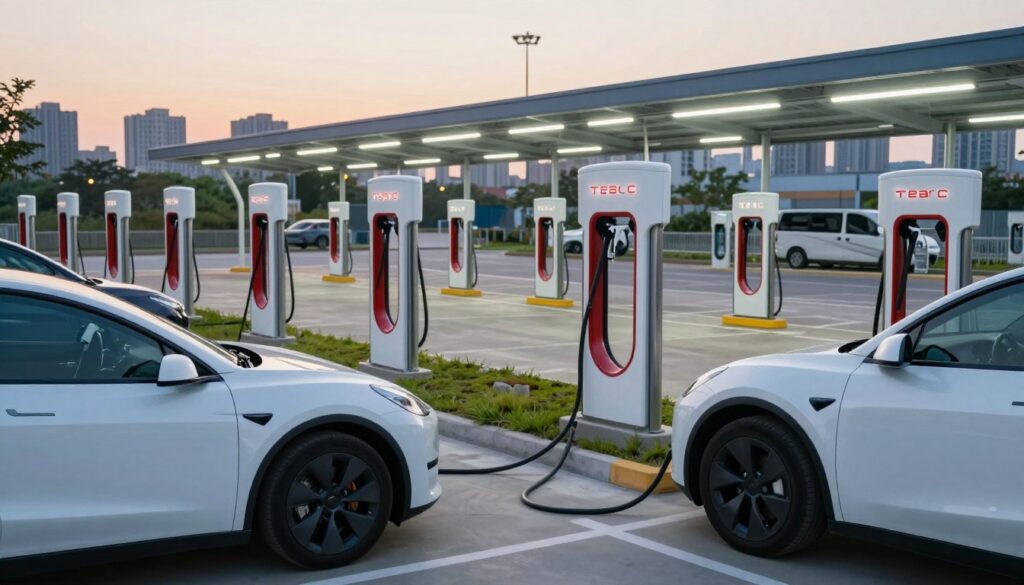
At a Supercharger station, my car connects automatically. This plug-and-charge convenience means no fuss with apps or cards. It’s all about getting me back on the road fast.
Public Charging Options
There’s more than just Tesla’s network for charging. Public stations are key for drivers needing a quick charge while out and about.
- Level 2 Chargers: Great for longer stops at places like shopping centers or hotels.
- DC Fast Chargers: Perfect for quick energy boosts on highways.
- Network Diversity: Many third-party providers offer adapters, making electric vehicle range comparison better for Tesla owners.
Home Charging Solutions
Charging at home is the biggest perk of owning a Tesla. Waking up to a full battery every morning beats traditional gas cars.
I use a dedicated wall connector for my car’s daily charge. Using off-peak electricity rates keeps my energy costs low. This setup means I rarely need to find a charging station for daily driving.
Factors Impacting Battery Longevity
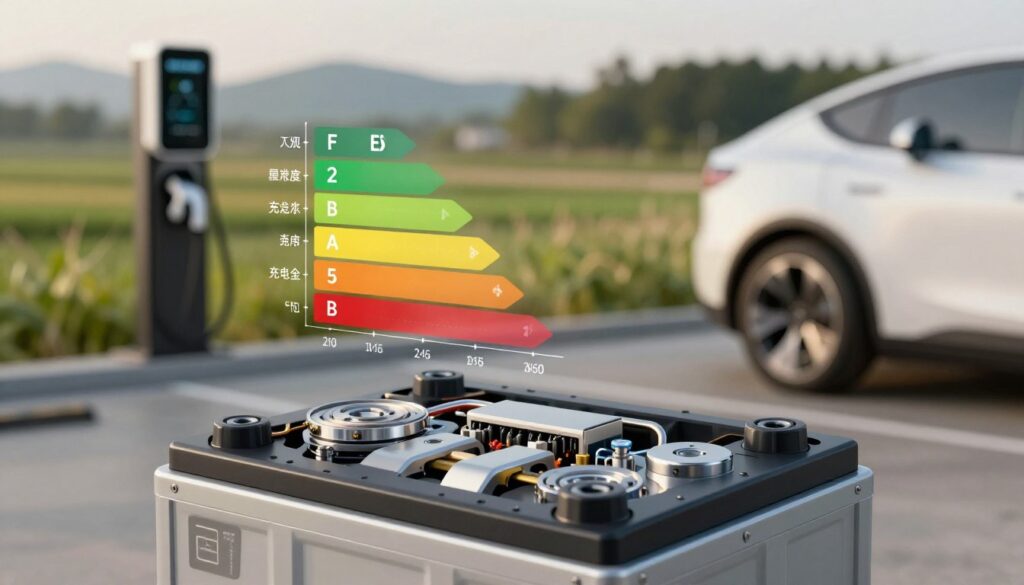
I often think about how my daily driving habits affect my vehicle’s battery pack. Keeping the cells’ chemical integrity is key for EV battery efficiency. By being mindful, I help my car last longer.
How Driving Habits Affect Battery Life
My driving style greatly affects battery life. Aggressive driving and high speeds can overheat the battery. I try to drive smoothly to keep it cool.
Keeping the battery fully charged for too long is bad. Here’s how I protect it:
- Avoid keeping the battery at 100% charge for extended periods.
- Limit deep discharges by plugging in before the battery drops below 20%.
- Use regenerative braking to smooth out my driving and reduce mechanical wear.
Importance of Regular Maintenance
Electric vehicles need less maintenance than gas cars but aren’t completely free from it. I follow the manufacturer’s service schedule to keep everything running well. This includes checking the cooling system, which is key for battery temperature.
Proper tire maintenance also boosts EV battery efficiency. Under-inflated tires increase resistance, making the battery work harder. Keeping tires at the right pressure helps reduce strain on the powertrain.
The Role of Software Updates
Tesla often releases updates that improve more than just features. These updates enhance thermal management and charging algorithms. I always update my car to get the latest in battery management technology.
These updates help balance the battery cells, ensuring they work together well. This lets the car manage its charging cycles, extending battery life. Keeping up with software updates is a simple way to protect my car’s performance.
Preparing for Long Trips in My Tesla
Planning a cross-country trip in my Tesla needs careful steps for a smooth ride. I use the built-in navigation to plan my route. I also keep in mind how far my Tesla can go on one charge.
Smart Route Planning
The onboard computer helps me find the best routes. It takes into account traffic and elevation changes. This makes me feel confident when driving long distances in my electric car.
Strategic Charging Stops
I make short stops to keep my battery in the best range. This way, I save time and keep charging speeds up. I also check Supercharger locations to avoid delays.
Essential Travel Gear
I carry a mobile connector kit for backup at my destination. I also have a physical map and a portable tire inflator. These items make my trips more enjoyable. Share your Tesla experiences as you explore new places.
FAQ
What are the primary factors that influence my Tesla battery range on a daily basis?
Several key factors affect my Tesla’s range. Aerodynamics and keeping tires at the right pressure are important. So is using regenerative braking well.
Extreme weather and fast driving also change the range. City driving tends to use less battery than highway driving.
How do the Tesla Model S range and Tesla Model X battery range compare to other long range electric vehicles?
The Tesla Model S is a top choice for luxury sedans. It leads in distance. The Model X is also impressive, being a high-performance SUV.
When comparing electric vehicles, Teslas often rank high. This is due to their advanced tech and energy density.
Why does my actual Tesla range per charge sometimes differ from the EPA estimates?
EPA ratings are based on lab tests. Real-world driving, like steep hills and heavy climate control, can reduce range. The energy app in the car gives real-time data.
What can I do to maximize EV battery efficiency during long road trips?
To get more range on long trips, I drive at a steady speed. Using “Chill” mode helps too.
I plan my route for Supercharger stops. This prepares the battery for faster charging. Minimizing roof rack attachments also helps.
How do over-the-air updates affect my Tesla range per charge and battery health?
Tesla updates can improve performance. They optimize systems and enhance efficiency. This means my car gets better mileage without needing a service visit.
Is range anxiety a valid concern for new owners of long range electric vehicles?
Range anxiety is fading. The Supercharger network and better battery ranges make long trips easy. The in-car trip planner keeps me informed, making long drives worry-free.

Hi! I’m Moheen Iftikhar, the creator of «CarPulseMedia» I’m passionate about exploring the latest car trends, automotive technology, and driving tips to help you stay informed and inspired. I share expert guides, car reviews, and practical advice for every auto enthusiast.