

How Tesla Full Self-Driving Mode Works in the United States
Did you know over 400,000 vehicles in the U.S. have advanced driver-assistance software? Many think their cars can drive by themselves, but it’s not that simple. The difference between what’s promised and what really happens can confuse many drivers.
Tesla Full Self-Driving mode is not fully autonomous. It’s a supervised system. I aim to explain how it works in the complex American road environment. It’s important to know the software’s capabilities and the critical responsibility that’s yours.
I’ll look at the tech and laws to help you understand this changing world. Whether you’re curious or already using it, knowing how Tesla Full Self-Driving mode works is key for safe driving.
Key Takeaways
- The software is currently classified as a Level 2 driver-assistance system.
- Active human supervision is required at all times during operation.
- The system relies on a complex array of cameras and neural networks.
- Regulatory frameworks in the United States are catching up to software updates.
- Knowing the tech’s limits is vital to avoid accidents.
Overview of Tesla Full Self-Driving Mode
Exploring Tesla Full Self-Driving mode means understanding its role on the road. It’s a set of advanced features meant to help drivers during different tasks. But, it’s clear that the driver must always be in control.
Definition of Full Self-Driving (FSD)
Tesla FSD is a top-notch driver-assistance system. It’s built on basic safety features and aims to help with complex city driving. The software uses lots of visual data to make quick decisions, but the driver must be ready to take over.
Key Features of FSD
The self-driving cars can do more than just stay in their lane. They handle tasks like stopping at lights and navigating through stop signs. They also make automated lane changes and follow routes on city streets with little input needed.
These features aim to make driving long distances or through busy cities easier. But, it’s important to remember that the driver is always in charge. The system is more like a co-pilot, not a full replacement for human decision-making.
Differences Between FSD and Autopilot
Many people mix up the Tesla Autopilot system with the more advanced FSD. Both use cameras, but they work in different ways. Here’s a table showing the main differences.
| Feature | Basic Autopilot | Full Self-Driving |
|---|---|---|
| Highway Steering | Included | Included |
| Traffic Light Control | Not Available | Included |
| City Street Navigation | Not Available | Included |
| Primary Purpose | Highway Assist | Urban & Highway |
In summary, Tesla Autopilot system is mainly for highway use. Tesla FSD offers more features for various road types. Knowing these differences helps us understand the progress of self-driving cars. By understanding what Tesla FSD can and can’t do, we see how it’s getting closer to making driving safer.
How Tesla Achieves Self-Driving Technology
I often marvel at how a vehicle can drive itself. It uses advanced software and hardware to understand the road. This autonomous vehicle technology makes quick decisions based on real-time data.
Neural Networks and Machine Learning
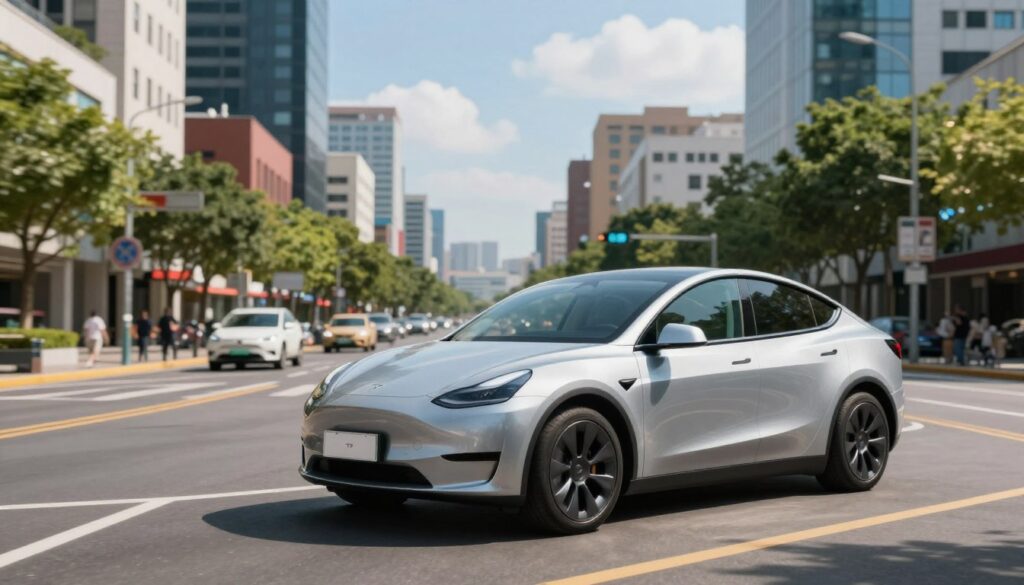
The car’s brain is made of neural networks that analyze visual data. These networks learn from millions of miles of driving data. This helps the artificial intelligence in cars to understand patterns and predict human actions.
Every time a driver uses the system, it gets better. This feedback loop makes the software safer and more capable. So, Tesla Full Self-Driving mode gets better with each update.
Sensor Suite: Cameras, Radar, and Ultrasonic Sensors
The car sees the world with a suite of sensors. These sensors give a 360-degree view. Cameras capture images, while other sensors measure distance and detect obstacles.
These sensors are key to the car’s safety and performance. Here’s how they help:
| Sensor Type | Primary Function | Detection Range |
|---|---|---|
| Vision Cameras | Object identification and lane tracking | Long-range |
| Ultrasonic Sensors | Proximity detection for parking | Short-range |
| Radar/Processing | Speed and depth perception | Medium-range |
This setup is vital for the car’s self-driving ability. It lets the car react to dangers faster than a human. This mix of hardware and software is what makes Tesla Full Self-Driving mode work.
Regulatory Landscape in the United States
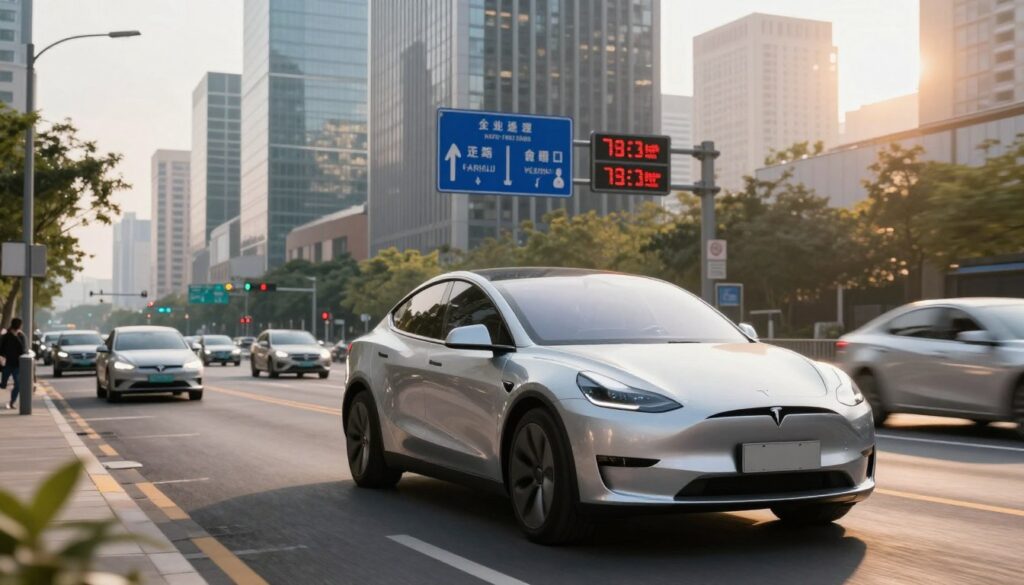
The rules for Tesla autonomous vehicles are complex. They mix federal and state laws. It’s important to know how these laws work together to control autonomous driving technology.
Federal Regulations Governing FSD
The National Highway Traffic Safety Administration (NHTSA) leads at the national level. They set federal safety standards for all cars, including those with advanced tech.
The agency offers guidance, not strict rules, for autonomous driving technology. This lets companies innovate while keeping safety first.
State-Level Regulations and Variations
States have their own rules, even with federal guidelines. This means the rules for Tesla autonomous vehicles can change when you move to a new state.
Some states are open to testing, while others have strict rules. This mix makes it hard to roll out self-driving cars across the country.
| Regulatory Aspect | Federal Role | State Role |
|---|---|---|
| Safety Standards | Mandatory Compliance | Supplemental Rules |
| Testing Permits | Not Applicable | Required in Most States |
| Liability Laws | General Guidance | Primary Jurisdiction |
| Data Reporting | Voluntary Guidance | Often Mandatory |
Safety and Performance Metrics
When I look at the Tesla Autopilot system, I focus on safety and innovation. These technologies go through a lot of testing before they reach cars. My goal is to give you a fair view of how they work in different situations.
Testing and Development Practices
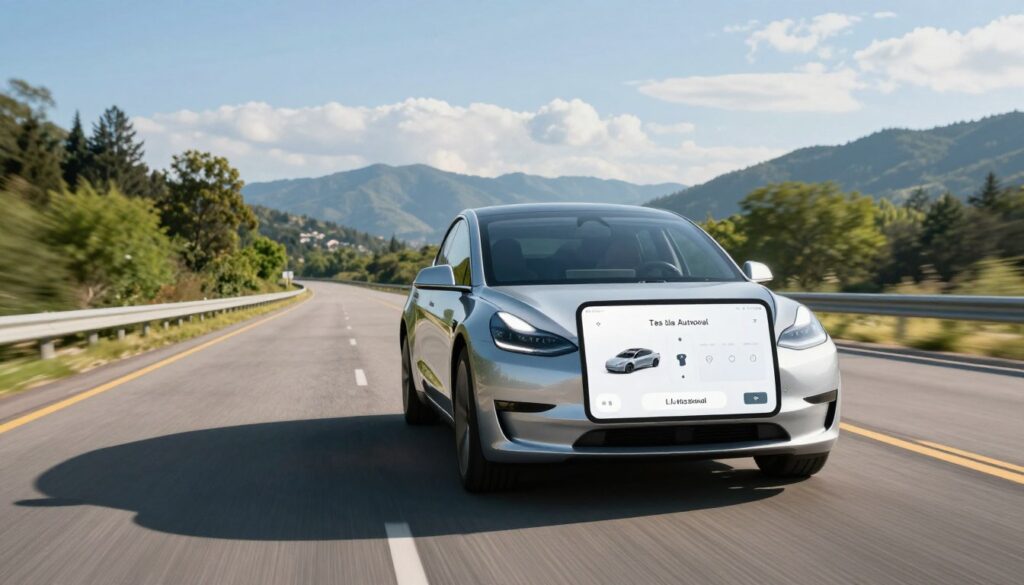
Tesla uses a detailed process to improve its self-driving capabilities. It starts with huge simulation tests where software is tested against billions of virtual miles. This helps find problems without risking human drivers.
After simulations, Tesla uses a special “shadow mode” in its cars worldwide. In this mode, the software checks its choices against what human drivers do. This data-driven feedback loop is key for making the system better and more accurate.
Accident Rates and Safety Outcomes
Looking at real-world safety means comparing accident rates to miles driven. The Tesla Autopilot system is meant to help keep drivers safe. By comparing these numbers to national averages, we can see how well it does.
The table below shows how safe Autopilot is compared to not using it. These numbers show how safety features can make a difference on the road.
| Metric Category | Autopilot Engaged | No Autopilot/Active Safety | US National Average |
|---|---|---|---|
| Miles per Accident | 4.5 Million | 1.5 Million | 0.5 Million |
| Safety Improvement | High | Moderate | Baseline |
| System Reliability | Consistent | Variable | N/A |
These numbers can change based on many factors. Continuous monitoring is key as the software gets better at handling tough driving tasks. My review shows the tech is promising, but human help is essential for now.
User Experience with FSD
Using Tesla FSD has given me a glimpse into the future of driving. It makes long drives feel more relaxed. But, I must stay alert to keep everyone safe.
Real-Life Applications and Scenarios
On highways, FSD keeps the car steady and adjusts speed well. It helps a lot during heavy traffic, making me less tired. But, city driving is trickier and needs my full focus.
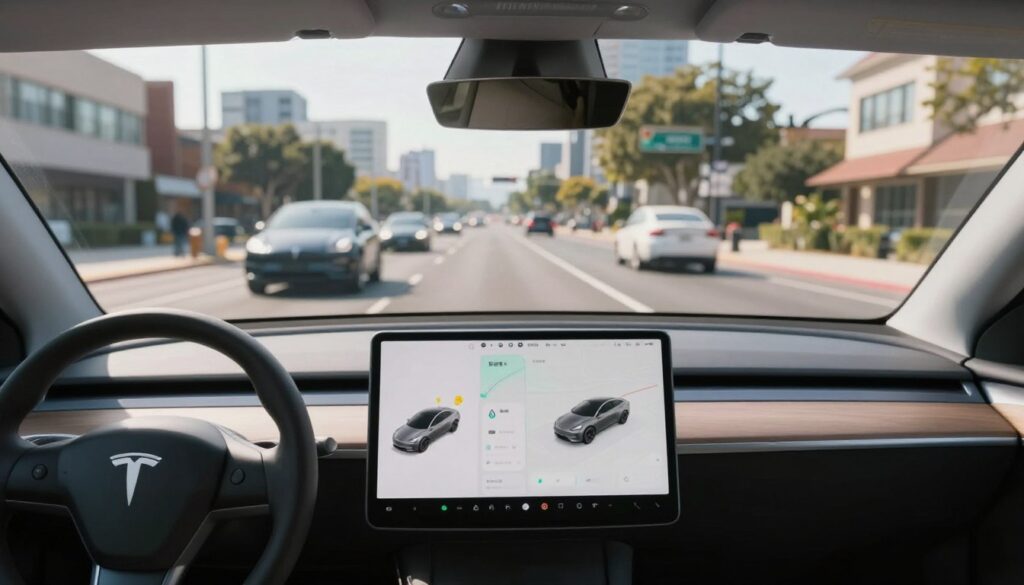
The car’s self-driving skills shine when roads are clear and signs are easy to read. It works best in places where it can easily understand its surroundings. This shows how important both the car’s smarts and human watchfulness are.
Feedback from Tesla Owners
Many owners love how FSD makes long trips easier. They say it takes time to get used to, but it’s worth it. They stress the importance of knowing what FSD can and can’t do.
People in the community are excited about how fast the tech is getting better. Some worry about city driving, but most see the big progress in car tech. They all agree that FSD is a big step forward.
System Updates and Improvement Cycle
Tesla makes owning a car a unique experience by treating it like a living, learning machine. Unlike other car makers, Tesla doesn’t need you to visit a dealership for big changes. They keep the artificial intelligence in cars up to date with a dynamic approach.
Over-the-Air Software Updates
The heart of this innovation is the ability to send over-the-air (OTA) updates directly to your car. When I get a notification, I know my car is getting better. This happens because Tesla has a huge fleet of cars collecting data from the road.
Engineers use this data to find and fix issues. They then send these fixes to your car without you doing anything. It’s a cycle of data, learning, and updates that keeps your car’s software current.
Community Input and Feature Requests
Tesla also listens to what users say to shape future updates. I’ve seen how feedback on social media can change what features get added first. This makes users feel like they’re part of the team.
Users share their experiences, helping the team see how Tesla FSD works in different situations. This feedback is key to making the artificial intelligence in cars better for everyone. Here’s a table showing how Tesla’s approach differs from traditional car care.
| Feature | Traditional Vehicles | Tesla Model |
|---|---|---|
| Software Updates | Dealership Visit Required | Remote OTA Updates |
| Feature Growth | Static After Purchase | Continuous Improvement |
| Data Usage | Limited/None | Fleet-Wide Learning |
| Maintenance | Reactive Repairs | Proactive Optimization |
Challenges in Full Self-Driving Implementation
Getting to fully self-driving cars is more than just updating software. It’s about solving big technical and social problems. Tesla autonomous vehicles have made great strides, but the journey to full autonomy is tough. It’s important to understand these challenges to see where we really are.
Technical Challenges in Diverse Environments
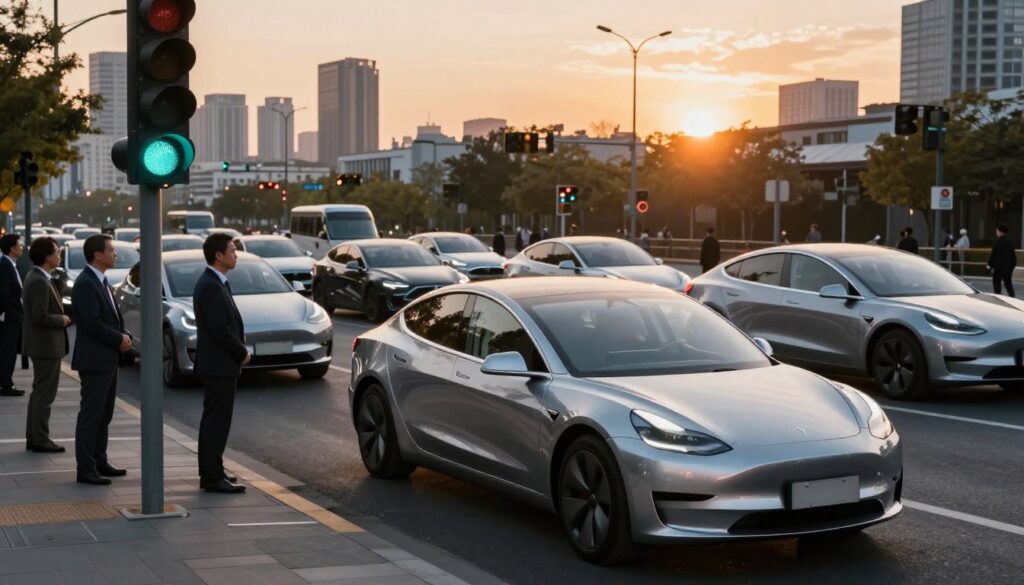
One big problem is making artificial intelligence in cars work in all kinds of weather. Heavy snow or rain can mess up sensors, making it hard to see the road. Plus, people’s actions are hard to predict, leading to tricky situations.
Here are some things that make driving hard:
- Sensor limitations during severe weather events like fog or ice.
- The unpredictable nature of human drivers, pedestrians, and cyclists in urban settings.
- The need for high-definition mapping that remains accurate in constantly changing construction zones.
- Complex intersections that require nuanced decision-making beyond standard traffic rules.
Public Perception and Acceptance
Getting self-driving cars to work also depends on people trusting them. Many are worried about their safety, thanks to some accidents in the news. To win trust, car makers need to show they’re reliable and talk openly about their tech.
It’s not just about the tech; it’s about making people feel safe. If people think self-driving cars are safer, they’ll use them more. So, the industry must keep proving these cars are safe through lots of tests and real-world data.
In the end, getting to self-driving cars is a long journey. By tackling both the tech and trust issues, we can get closer to a future where driving is easier and safer.
Future Developments and Innovations
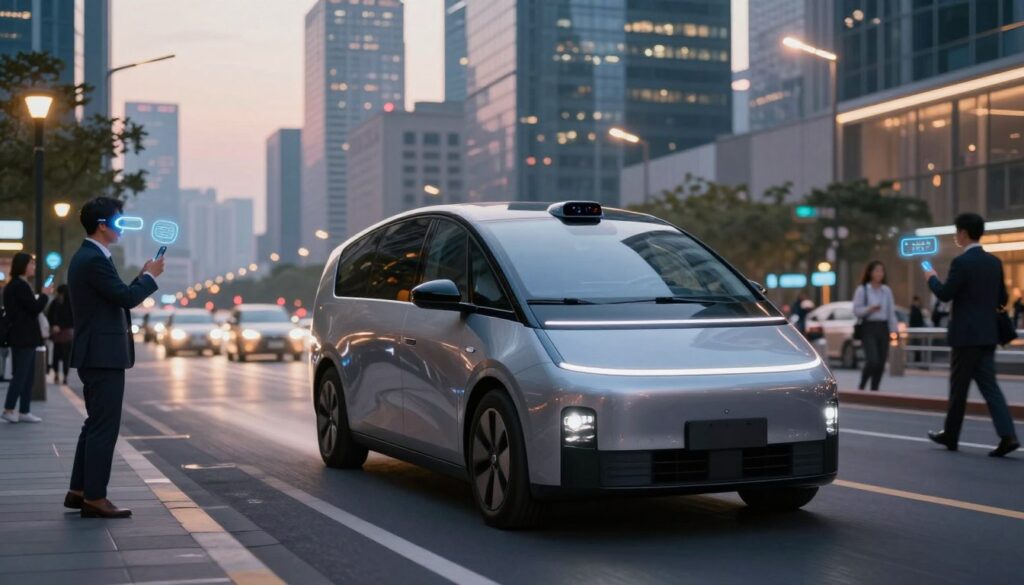
Looking ahead, Tesla’s roadmap shows a clear path to total vehicle autonomy. The current pace suggests we’re moving beyond simple driver assistance. We’re entering a new era of autonomous vehicle technology.
Upcoming Features and Enhancements
The engineering team is working on refining the neural network architecture. This change lets the system learn from video data, not just rules. I expect future updates to make the vehicle better at navigating complex urban areas and unpredictable weather.
These self-driving capabilities are getting a boost from increased compute power. By using data from millions of vehicles, the software gets smarter with each mile. This process helps the system handle unusual situations more accurately than ever.
Long-Term Vision for Autonomous Driving
My view on the long-term vision is a shift toward a fully driverless world. Tesla wants to show that autonomous driving technology is more than a convenience. It’s a key improvement for road safety. The goal is to cut down on human error, the main cause of accidents.
As the industry grows, I see these systems changing how we plan cities and move around. The table below shows how these systems will evolve toward full autonomy.
| Feature Category | Current Status | Future Goal |
|---|---|---|
| Decision Making | Rule-based logic | End-to-end AI |
| Human Oversight | Active supervision | Full autonomy |
| Environment Mapping | Real-time processing | Predictive modeling |
| System Reliability | High-level assistance | Zero-intervention |
The success of autonomous driving technology relies on ongoing validation and public trust. I’m sure that as self-driving capabilities improve, autonomous vehicle technology will become the norm in the U.S.
Comparisons with Other Autonomous Vehicles
Looking at the Tesla Autopilot system shows a big difference in how we teach cars to drive. Tesla uses cameras, while others use sensors like lidar and radar. This debate is key to the future of autonomous vehicle technology.
Tesla vs. Competitors
Companies like Waymo and Cruise use many sensors. They say this makes self-driving cars safer. But Tesla thinks cameras and advanced software can do the job just as well.
Here’s a table that shows how Tesla and others differ:
| Feature | Tesla Approach | Competitor Approach |
|---|---|---|
| Primary Sensor | Cameras (Vision) | Lidar & Radar |
| Mapping | Real-time processing | HD Pre-mapped |
| Fleet Size | Millions of vehicles | Limited pilot zones |
Unique Selling Points of Tesla’s FSD
The Tesla Autopilot system has a big advantage: it learns from millions of cars. This constant learning makes it better over time. It’s a big plus for self-driving cars.
Several things make Tesla stand out in autonomous vehicle technology:
- Vertical Integration: Tesla controls both the hardware and the software, making updates easy.
- Neural Network Training: The company uses huge computers to learn from its cars.
- Scalability: Without expensive lidar, Tesla can put its system in more cars.
I think Tesla’s focus on vision is why it leads the conversation. While others work on small areas, Tesla wants a solution for everywhere.
Conclusion: The Future of Driving with Tesla
We are at a key moment in how we move around. The fast growth of self-driving tech means our daily drives will change a lot in the next ten years.
Reflections on Current Capabilities
Watching these systems, I see both amazing tech and the need for careful steps. Tesla’s self-driving cars are a big leap towards safer roads. I think we’ll see these cars get even better at handling city streets with updates.
Shaping Tomorrow’s Roads
This tech change is more than just making our rides better. It could change how cities are built and make traffic flow better in the U.S. Tesla’s cars will lead the way in making roads safer with their data-driven tech. What do you think these changes will mean for your travels in the future?
FAQ
What is the primary difference between the standard Tesla Autopilot system and Tesla Full Self-Driving mode?
The main difference is in what they can do. The Tesla Autopilot system works well on highways. It has Traffic-Aware Cruise Control and Autosteer in one lane. On the other hand, Tesla Full Self-Driving mode (FSD) can handle city streets, traffic lights, and stop signs. It also has Navigate on Autopilot for lane changes and highway interchanges.
While both need the driver to stay alert, Tesla FSD is much more advanced. It offers better self-driving capabilities.
How does Tesla’s approach to autonomous driving technology differ from competitors like Waymo or Cruise?
Tesla uses a different method than Waymo and Cruise. Tesla relies on cameras and artificial intelligence in cars for its vision system. This is different from Lidar used by others.
Elon Musk believes in Tesla Vision. It uses eight cameras to see the world like humans do. This avoids the need for expensive laser sensors.
Is it legal to operate Tesla autonomous vehicles in a completely “hands-off” manner in the United States?
No, it’s not legal. The autonomous vehicle technology is only Level 2. This means the driver must always be ready to take control.
Even though the car can steer and brake, the driver is legally responsible. This is because the NHTSA and state laws require it.
How do over-the-air updates improve the performance of Tesla FSD over time?
Tesla’s updates are a big plus. They use data from many cars to improve the system. This is called fleet learning.
When a car faces a new situation, the data is used to train the system. This leads to regular updates that make the car better. You don’t need to visit a service center for these improvements.
What are the current technical challenges facing the widespread adoption of self-driving capabilities?
There are a few big challenges. For example, extreme weather and unpredictable human actions are hard for Tesla autonomous vehicles to handle. These include heavy snow, fog, and complex intersections.
While the Tesla Autopilot system works well on highways, it needs to get better at these edge cases. Overcoming these challenges is key for Tesla Full Self-Driving mode to become fully driverless.

Hi! I’m Moheen Iftikhar, the creator of «CarPulseMedia» I’m passionate about exploring the latest car trends, automotive technology, and driving tips to help you stay informed and inspired. I share expert guides, car reviews, and practical advice for every auto enthusiast.