



Maximize Hyundai fuel efficiency with these expert tips
Did you know simple driving changes can boost gas mileage by up to 30 percent? Many drivers miss out on how small actions affect their wallet and the planet. I think it’s possible for every owner to improve Hyundai fuel efficiency and save money.
To reach peak performance, mix regular maintenance with careful driving. These expert tips will help you squeeze every last drop from your gas. This guide is your comprehensive roadmap for better daily drives or long trips. Saving on gas is not just about money; it’s about driving smarter every day.
Key Takeaways
- Small driving adjustments can boost gas mileage by nearly one-third.
- Regular vehicle maintenance is essential for long-term savings.
- Mindful habits reduce your overall environmental footprint.
- Expert strategies help you maximize every gallon of gasoline.
- Consistent care improves both city commutes and highway travel.
Understanding the Mechanics of Hyundai Fuel Efficiency
Learning about Hyundai green technology helps me drive better. Knowing how my car works lets me make smarter choices on the road. This knowledge helps me get better performance and save money in the long run.
How Hyundai Engineering Impacts Your Gas Mileage
The engine of my car is all about balance. Engineers make sure every bit of fuel is used right. This meticulous attention to detail keeps the engine running well without wasting energy.
Several key engineering factors help achieve this balance:
- Advanced variable valve timing systems.
- High-pressure direct fuel injection.
- Low-friction internal engine components.
These features work together to improve Hyundai fuel efficiency. When the engine runs at its best, my gas mileage goes up a lot.
The Role of Aerodynamics and Weight Distribution
The shape of my car is key to its energy use. Aerodynamic drag pushes against the car, but Hyundai’s design fights it. Sleek lines and panels help the car cut through the air easily.
Weight distribution is also crucial for stability and efficiency. By spreading the weight evenly, the car needs less effort to move. This smart design is part of Hyundai green technology, making every pound count.
Thinking about these factors shows me that Hyundai fuel efficiency is more than just the engine. It’s a complete design that focuses on smooth airflow and balanced weight for top performance.
Optimizing Your Driving Habits for Better Economy
Changing how you use the pedals can greatly improve your car’s performance. Many drivers don’t know that their daily habits waste a lot of fuel. By following a few Hyundai efficient driving tips, you can cut down on gas trips.

Mastering Smooth Acceleration and Braking Techniques
Aggressive driving hurts your car’s fuel economy. Slamming on the gas pedal makes your engine work too hard, wasting fuel fast. Instead, use a gentle touch on the throttle to keep your engine efficient.
Hard braking also harms your car’s efficiency. Anticipate traffic to avoid sudden stops and keep moving. Here are simple tips to boost your Hyundai fuel efficiency:
- Accelerate gradually to reach your desired speed.
- Look ahead to anticipate red lights or slowing traffic.
- Release the accelerator early when approaching a stop sign.
Maintaining Consistent Speeds on Highways
Changing your speed on highways wastes energy. I use cruise control when it’s safe to do so. This is a top Hyundai efficient driving tip because it keeps your speed steady and saves fuel.
Keeping a constant speed helps your transmission stay in the best gear. This simple change keeps your Hyundai fuel efficiency high on long trips. By staying consistent, your car’s computer can optimize fuel delivery for better results.
The Importance of Regular Maintenance for Hyundai Vehicles
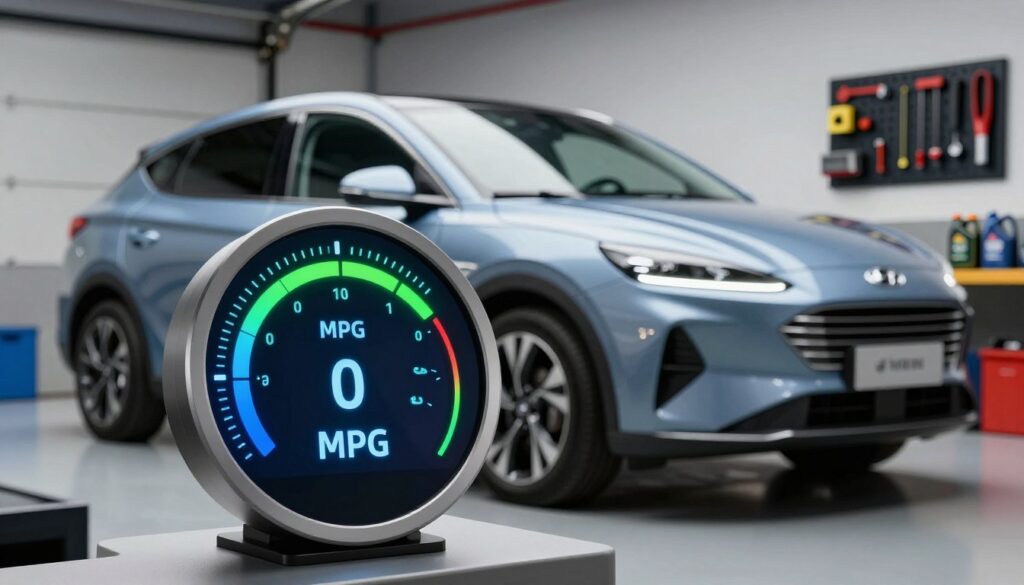
Getting the best fuel efficiency is not just about driving smart. It also needs regular care. A well-kept engine is key to reaching the Hyundai MPG ratings set by the maker. Skipping basic upkeep means wasting money on gas.
Today’s Hyundai green technology works best when everything is in sync. Keeping up with maintenance ensures my car runs well for years.
Why Clean Air Filters Matter for Combustion
Air filters are crucial but often ignored. A dirty filter limits oxygen to the engine, making it work harder. This messes up the air-to-fuel mix, raising fuel use and slowing down the car.
“The condition of your vehicle’s engine is the single most important factor in determining its long-term fuel economy and reliability.”
Changing my air filter on time lets the engine breathe easily. This supports the Hyundai green technology in my car. It’s a small cost for better gas mileage.
Monitoring Spark Plug Health and Ignition Timing
Spark plugs ignite the fuel-air mix in the cylinders. Worn or dirty plugs mess up ignition timing, causing poor combustion. This hurts my Hyundai MPG ratings and can damage the engine over time.
I always check my spark plugs as the manual suggests. Clean, functioning plugs mean every fuel drop is used right. Here’s how different maintenance tasks affect your car’s efficiency.
| Maintenance Task | Impact on Efficiency | Recommended Interval |
|---|---|---|
| Air Filter Replacement | High | Every 15,000 miles |
| Spark Plug Inspection | Medium-High | Every 30,000-60,000 miles |
| Oil and Filter Change | Medium | Every 5,000-7,500 miles |
| Fuel System Cleaning | Medium | Every 30,000 miles |
Tire Pressure and Its Direct Link to Hyundai MPG Ratings
Keeping your tires in good shape is key to better fuel economy. Tires are the only part of your car that touches the road. If they’re not inflated right, they make your car work harder to move.
This extra effort means you use more fuel. So, your Hyundai MPG ratings can drop. This leads to higher fuel costs over time.
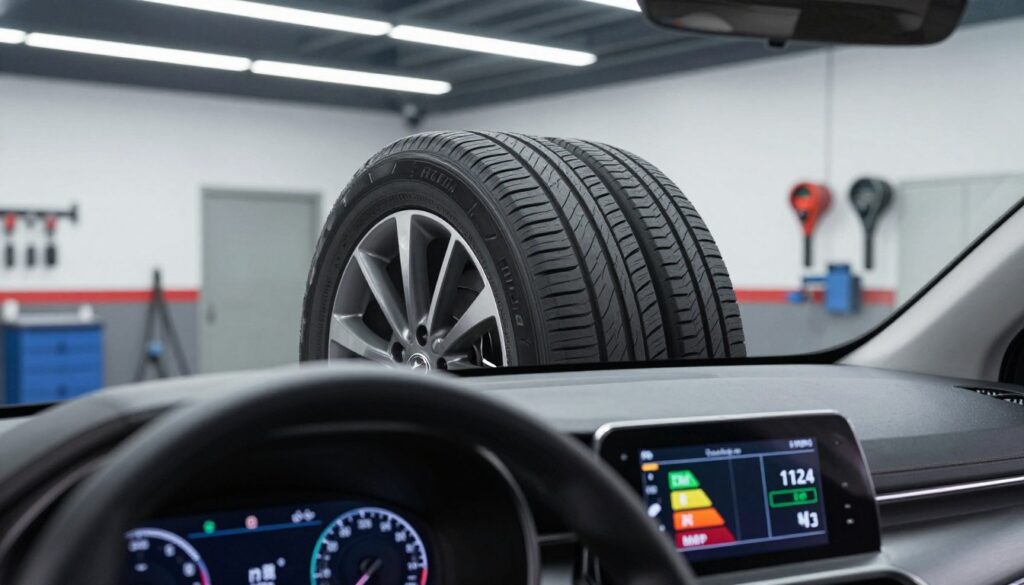
Checking Tire Pressure for Optimal Rolling Resistance
It’s important to check your tire pressure monthly. Always use the pressure listed on the driver-side door jamb. This is the correct pressure for your car.
Using a digital gauge makes it easy. If your tires are low, add air until they’re at the right PSI. This helps your car move more smoothly.
Choosing the Right Tires for Fuel-Efficient Performance
When it’s time for new tires, choose wisely. Look for low-rolling-resistance tires. These are made to save energy while driving.
These tires help keep your Hyundai MPG ratings high. They make it easier for your car to move.
| Tire Condition | Rolling Resistance | Impact on Efficiency |
|---|---|---|
| Properly Inflated | Low | Optimal |
| Under-Inflated | High | Significant Loss |
| Low-Resistance Tires | Very Low | Maximum Gains |
Buying good tires is a smart choice. Regular checks and the right tires keep your car running well. This way, you get the most out of your car and save money.
Leveraging Hyundai Fuel Economy Features and Drive Modes
Modern Hyundai vehicles use smart software to save energy. They adjust how the car uses fuel by tweaking the throttle and shifting gears. This helps me get better Hyundai MPG ratings on my daily drives.

Utilizing Eco Mode for Daily Commuting
I use Eco Mode a lot when driving in the city. It softens the throttle input, so the engine doesn’t burn too much fuel in traffic.
This mode limits how fast the car can go. It makes sure every bit of fuel is used wisely. It’s a simple yet highly effective way to save energy without making my commute uncomfortable.
Understanding Smart Mode and Its Adaptive Benefits
Smart Mode takes efficiency even further with artificial intelligence. It watches how I drive and adjusts to save fuel. It finds the perfect balance between power and economy.
If I drive smoothly, the car saves fuel. But if I need more power, it quickly adapts. This smart tech is key for anyone wanting to keep their Hyundai MPG ratings high.
Managing Vehicle Weight and Aerodynamic Drag
Extra weight and drag can really hurt your Hyundai gas mileage. Every pound inside your car makes the engine work harder. This means it uses more fuel over time.
By keeping your car light, the engine can work more efficiently. This is key to better fuel economy.

Removing Unnecessary Cargo to Improve Efficiency
Take a few minutes to clean out your trunk and cabin. Get rid of items you don’t need for your daily drive. Heavy sports gear, tools, or boxes can add up fast.
Removing this excess weight is a simple way to boost your fuel economy. It’s free and immediate.
Think of your car like an athlete. The less it weighs, the faster and more efficiently it moves. Lightening the load means less energy needed to speed up. This small change can make a big difference in your Hyundai gas mileage.
The Impact of Roof Racks and External Accessories
External accessories like roof racks and bike mounts are handy. But they also cause wind resistance. At high speeds, this drag forces your engine to push against air.
If you’re not using these accessories, take them off. This helps streamline your vehicle. Even an empty roof rack can disrupt airflow, leading to higher fuel use.
By removing these items when not in use, you protect your Hyundai gas mileage. These small changes keep your car aerodynamic on every trip.
Advanced Strategies for Hyundai Hybrid and Electric Models
Learning how to use the special systems in my hybrid or electric car is key. It helps me get the most out of every charge. When I drive a Hyundai fuel-efficient model, using advanced techniques boosts my range. This knowledge makes my daily drives better.
Maximizing Regenerative Braking in Hyundai Hybrids
Regenerative braking is a smart feature that captures energy that would be lost as heat. I focus on smooth, gradual deceleration to use it well. This improves my Hyundai gas mileage by turning momentum into electricity.
I use the paddle shifters to adjust regenerative braking. This lets me drive on one pedal in many situations. It keeps the battery charged during stop-and-go traffic.
Optimizing Charging Habits for Hyundai Electric Vehicles
Managing my charging cycles is crucial for battery health. I keep my battery level between 20% and 80% for daily use. Consistency is key to keep my vehicle performing well for years.
“Proper battery management is the single most important factor in preserving the range and longevity of an electric vehicle’s powertrain over its lifetime.”
The table below shows common charging scenarios I face. It helps me plan my trips better.
| Charger Type | Charging Speed | Best Use Case |
|---|---|---|
| Level 1 (120V) | Slow | Overnight home charging |
| Level 2 (240V) | Moderate | Daily home or office use |
| DC Fast Charging | Rapid | Long-distance road trips |
By following these strategies, I see better Hyundai gas mileage. These habits are essential for anyone with a Hyundai fuel-efficient model. They help get the most value from the investment.
The Role of Engine Oil and Fluid Quality
The secret to a long-lasting engine often hides in your oil pan. The quality and viscosity of your engine oil are key to optimal vehicle efficiency. By picking the right lubricant, you cut down on the internal friction your engine faces.
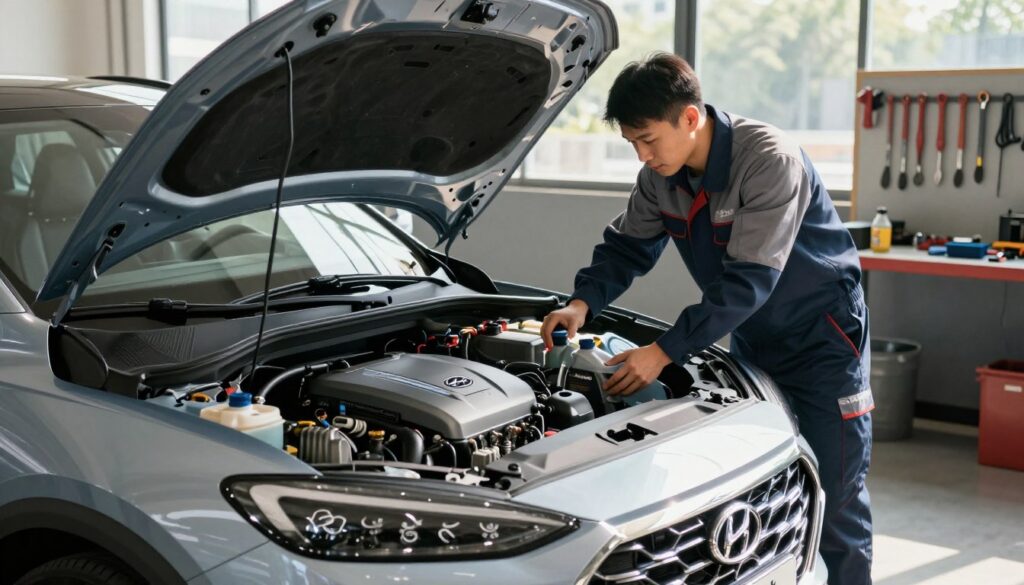
Selecting the Correct Viscosity for Your Hyundai Engine
Every engine needs a specific oil thickness, or viscosity. Always follow your owner’s manual for the right viscosity. The wrong oil can cause unnecessary drag, making your engine work harder and use more fuel.
Using the recommended oil ensures all parts get the right lubrication at different temperatures. This protects your engine and helps it run smoothly. It’s crucial for Hyundai eco-friendly performance over time.
The Benefits of Synthetic Oil for Internal Friction
Synthetic oil offers better protection than regular oil, mainly under heavy loads. Its uniform molecules create a strong film that cuts down friction. This makes your engine run smoother and more efficiently.
By reducing energy loss, synthetic oil helps your engine stay at its best while using less fuel. This choice is good for both long-term engine health and better daily fuel economy. Choosing the right fluid is a key step to unlocking your car’s full potential and supporting eco-friendly driving.
Planning Your Routes to Save Fuel
I’ve learned that the key to better fuel economy is in the route I choose. Taking a few extra moments to plan my journey helps me avoid common fuel-draining pitfalls. This proactive approach is crucial for anyone wanting to get the most out of their vehicle.
Avoiding Peak Traffic and Idling Situations
Heavy traffic is a major foe of fuel economy. When I’m stuck in stop-and-go traffic, my engine burns fuel without moving much. Idling at long traffic lights or in gridlock also wastes energy that could be used for moving forward.
I always check traffic reports before leaving. Shifting my departure time by just fifteen minutes can help me avoid the worst of the morning rush. This simple change helps my engine run more efficiently.
Using Navigation Systems to Find Efficient Paths
Modern technology has changed how I travel. I use advanced navigation systems with “eco-routing” features to find the most fuel-efficient paths. These tools help me avoid stops and maintain consistent speeds, which is great for my Hyundai fuel-efficient models.
“Efficiency is not just about the car you drive, but the intelligence you apply to every mile you travel on the road.”
By relying on these systems, I avoid shortcuts that might look appealing but are actually less efficient. The table below shows how different routes affect my fuel consumption during a typical week.
| Route Type | Traffic Level | Fuel Impact |
|---|---|---|
| Highway (Steady) | Low | Excellent |
| City (Stop-and-Go) | High | Poor |
| Eco-Routed Path | Minimal | Optimal |
Route planning is a strategic investment in my vehicle’s longevity. By avoiding unnecessary idling and choosing smarter paths, I make sure every drop of fuel is used effectively. This commitment to better driving habits keeps my car running at its best.
Monitoring Your Progress with Hyundai Blue Link
My journey toward better fuel economy became much simpler once I started using the right digital insights. I rely on the Blue Link system to provide a clear picture of how my driving habits influence my overall efficiency. This technology is an indispensable tool for any owner who wants to take full advantage of their Hyundai fuel economy features.
Analyzing Driving Data to Identify Improvement Areas
The app offers a detailed breakdown of my trips, highlighting exactly where I consume the most energy. By reviewing these reports, I can pinpoint specific behaviors that hinder my performance, such as aggressive acceleration or excessive idling. Understanding these patterns allows me to make small, calculated adjustments to my daily routine.
- Review monthly driving reports to spot trends in fuel usage.
- Identify specific routes that cause higher consumption levels.
- Compare my current performance against previous weeks to track growth.
Setting Goals for Better Fuel Economy
I find that turning fuel efficiency into a rewarding challenge keeps me motivated on the road. By setting measurable goals, such as increasing my average miles per gallon by a small percentage each month, I stay focused on my driving style. These Hyundai fuel economy features provide the necessary feedback to ensure I am always moving in the right direction.
Consistent monitoring helps me stay accountable for my habits behind the wheel. When I see the data reflect my efforts, it reinforces the value of smooth driving and smart route planning. Ultimately, using this technology ensures that I get the most out of every gallon of gas.
Common Myths About Hyundai Gas Mileage Debunked
I often see myths that stop owners from getting the best Hyundai efficient driving tips. Many drivers follow old advice that hurts their Hyundai gas mileage. Knowing the truth helps you save fuel and money.
Addressing Misconceptions About Warm-Up Times
Many think you must idle for a long time to warm up your engine. But, modern engines don’t need this. Idling wastes more fuel than driving right away.
Letting your car idle in the driveway gets you zero miles per gallon. Start driving gently after about thirty seconds. This warms up your engine faster through movement.
Clarifying the Truth About Premium Versus Regular Fuel
Another myth is about the type of fuel. Some think premium fuel boosts performance or engine cleanliness in all cars. But, if your Hyundai needs regular unleaded, premium fuel doesn’t help.
Using higher octane fuel than recommended doesn’t improve fuel economy or power. It just costs more without any benefits. Always check your owner’s manual for the right fuel grade.
Ignoring these myths lets you focus on real Hyundai efficient driving tips. Using correct information boosts your Hyundai gas mileage over time. These small changes make owning a Hyundai more affordable and fun.
Conclusion
To reach peak performance, mix smart driving with good vehicle care. These steps help you save money with every drive.
Change your daily drive to be better for the planet. Keep up with maintenance and drive wisely. This helps your wallet and the environment.
Check out your Hyundai’s fuel economy features. They help you understand how you drive. This info lets you make better choices on the road.
Even small changes can make a big difference. Start using these tips now. Your car will run better and save you money for years.
FAQ
How does Hyundai engineering impact my vehicle’s gas mileage?
Hyundai uses advanced engineering to improve gas mileage. They focus on precise engine tuning and aerodynamics to cut down on energy loss. This balance ensures my car runs efficiently, using less fuel.
What are the most effective Hyundai efficient driving tips for daily commuting?
To save fuel, I use a light touch on the gas pedal. Avoiding sudden starts and stops is key. Using cruise control on the highway helps keep a steady speed, boosting my car’s MPG.
Why is regular maintenance so important for Hyundai fuel economy features to work correctly?
A well-maintained engine is crucial for efficiency. Replacing the air filter and checking spark plugs helps a lot. Regular maintenance keeps my car running at its best, helping me reach high gas mileage targets.
How does tire pressure affect my Hyundai eco-friendly performance?
Keeping tire pressure right is important. Under-inflated tires make the engine work harder, using more fuel. I check the pressure often and use low-rolling-resistance tires for better performance.
When should I use Eco Mode or Smart Mode in my Hyundai?
I use Eco Mode in city driving to save fuel. Smart Mode adapts to my driving, optimizing fuel use. It’s great for different driving conditions.
Can reducing vehicle weight really improve my Hyundai gas mileage?
Yes, it does. I remove extra cargo and accessories to cut down on wind resistance. This simple step helps my MPG at high speeds.
How do I maximize the efficiency of Hyundai hybrid and electric models?
For hybrids, I brake smoothly to recharge the battery. Electric cars benefit from smart charging and using fuel-saving features. This helps extend the range and keeps the battery healthy.
Does the type of engine oil I use impact my Hyundai fuel efficiency?
Yes, using the right synthetic oil is key. It reduces engine friction, making it run smoother. This small step is crucial for long-term fuel efficiency.
How can I use Hyundai Blue Link to improve my driving habits?
Hyundai Blue Link tracks my driving habits. It helps me spot fuel-wasting areas. By setting goals, I can make fuel saving a regular habit.
Is it necessary to warm up my engine to get the best Hyundai gas mileage?
No, it’s a myth. Modern engines don’t need long warm-ups. Idling wastes fuel and emissions. Driving gently after starting is more efficient.

Hi! I’m Moheen Iftikhar, the creator of «CarPulseMedia» I’m passionate about exploring the latest car trends, automotive technology, and driving tips to help you stay informed and inspired. I share expert guides, car reviews, and practical advice for every auto enthusiast.